Author name: Species360

How Animal Record Keeping Systems Reduce Compliance Risk

How Animal Record Keeping Systems Reduce Compliance Risk

Blog / The Compliance Landscape for Zoological Institutions Is Expanding Zoological institutions operate within a regulatory environment that has grown considerably more complex over the past two decades and shows no sign of stabilising. The obligations that institutions must meet span multiple regulatory frameworks: national wildlife legislation, CITES permits and documentation requirements for international species […]

How Animal Record Keeping Systems Reduce Compliance Risk Read More »

Interoperability Challenges in Animal Record Keeping Systems

Interoperability Challenges in Animal Record Keeping Systems

Blog / The Strategic Importance of Connected Zoological Data The management of animals in professional care has become an increasingly networked activity. Institutions that once managed their collections in relative operational isolation are now participants in regional collection management plans, international studbooks, cooperative breeding programmes, and global conservation initiatives that require the regular, reliable exchange

Interoperability Challenges in Animal Record Keeping Systems Read More »

Ensuring Long-Term Data Preservation With Animal Record Keeping Systems

Ensuring Long-Term Data Preservation With Animal Record Keeping Systems

Blog / The Institutional Memory Problem in Zoological Record Keeping Zoological institutions accumulate animal records over periods that frequently span multiple decades. For long-lived species, the medical history, reproductive record, and behavioural profile of a single individual may represent forty or fifty years of continuous documentation. That record is not merely an administrative artefact; it

Ensuring Long-Term Data Preservation With Animal Record Keeping Systems Read More »

Standardising Data Entry Across Animal Record Keeping Systems

Standardising Data Entry Across Animal Record Keeping Systems

Blog / Why Inconsistency Is the Single Biggest Risk in Zoological Data Management The value of any data set is determined not by its volume but by its reliability. In the context of zoological record keeping, reliability depends on consistency: consistency in how data is categorised, how events are described, how identifiers are assigned, and

Standardising Data Entry Across Animal Record Keeping Systems Read More »

Designing Scalable Animal Record Keeping Systems for Modern Zoological Institutions

Designing Scalable Animal Record Keeping Systems for Modern Zoological Institutions

Blog / The Hidden Cost of Systems That Cannot Grow For zoological institutions, wildlife sanctuaries, and managed care facilities, the challenge of managing animal data is not simply a technical problem. It is an operational one with direct consequences for animal welfare, regulatory compliance, and institutional credibility. Many organisations that invested in record keeping infrastructure

Designing Scalable Animal Record Keeping Systems for Modern Zoological Institutions Read More »

Mobile-First Animal Management Software for On-Ground Staff

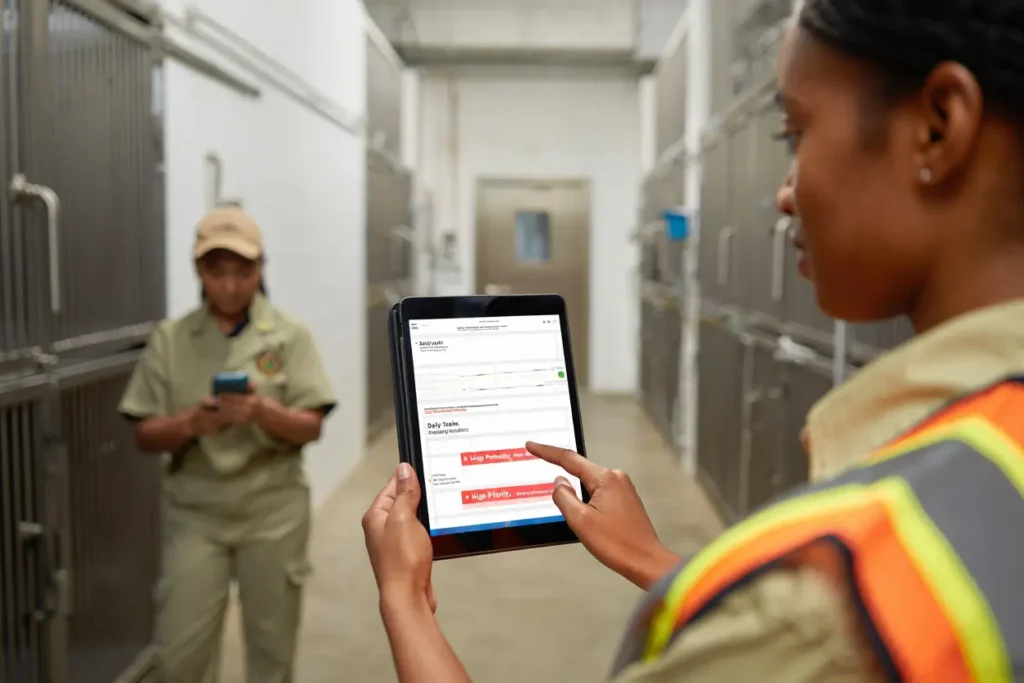
Blog / The Reality Gap Between Systems and Field Execution Most operational systems in animal care are designed from an administrative perspective. They assume: Stable working environments Desk-based access to systems Time availability for documentation after tasks None of these assumptions hold on the ground. Keepers operate in dynamic, physically demanding environments. They move between

Mobile-First Animal Management Software for On-Ground Staff Read More »

Using Animal Management Software for Feeding, Enrichment, and Care Logs

Blog / The Execution Layer Where Animal Care Succeeds or Fails Animal care strategies are often well-designed at a planning level. Institutions invest time defining nutritional protocols, enrichment frameworks, and health monitoring processes. On paper, these systems are robust. The breakdown happens at execution. Feeding is missed or inconsistently applied. Enrichment becomes irregular due to

Using Animal Management Software for Feeding, Enrichment, and Care Logs Read More »

Task Scheduling and Alerts in Animal Management Software

Blog / Effective conservation does not occur in isolation; it thrives through collaboration. Partnering with Species360 to aggregate global data on reproductive patterns and population dynamics is crucial for evidence-based conservation and the long-term sustainability of managed populations across institutions, maximizing global impact. Maria Franke, Director, Applied Conservation, Toronto Zoo The Operational Risk of Missed

Task Scheduling and Alerts in Animal Management Software Read More »

How Animal Management Software Streamlines Daily Husbandry Tasks

Blog / The Illusion of Routine in Daily Husbandry Operations Daily husbandry is often framed as routine. That framing is misleading and operationally dangerous. What appears repetitive on the surface is, in reality, a tightly interwoven system of time-sensitive actions, conditional decisions, and cross-team coordination. Feeding is not simply feeding. It depends on species-specific nutrition

How Animal Management Software Streamlines Daily Husbandry Tasks Read More »