Case Study: How ZIMS for Aquatics Improves Health and Breeding Outcomes
- By Species360
Health and breeding outcomes are central measures of success for aquariums involved in conservation and long-term species management. Achieving positive outcomes depends on more than expertise and experience alone. It requires accurate information, shared understanding, and the ability to learn from past decisions. This case study explores how digital information management supports better health and breeding outcomes in aquatic collections, drawing on practical lessons from institutions using ZIMS for Aquatics.
Aquatic species often present complex management challenges. Many are held in groups, undergo rapid life stage changes, and respond quickly to environmental conditions. Without reliable records, it can be difficult to identify patterns that influence health or reproductive success. ZIMS for Aquatics provides a structured way to capture and interpret this information, supporting more informed decision-making over time.
Setting the Context: Health and Breeding in Aquatic Collections
Aquariums balance daily animal care with long-term population planning. Health management and breeding programmes are closely linked, as health status can influence reproductive success and population sustainability.
Key factors influencing outcomes include:
- Accurate health histories
- Consistent monitoring of environmental conditions
- Detailed breeding and life history records
- Communication across care, veterinary, and management teams
When these elements are well documented and accessible, institutions are better positioned to support positive outcomes.
The Challenge: Fragmented Health and Breeding Records
In many aquariums, health and breeding data has historically been recorded across multiple systems. Veterinary notes, keeper logs, and breeding records may be stored separately, making it difficult to see the full picture.
This fragmentation can lead to challenges such as:
- Missed patterns in health or reproduction
- Inconsistent interpretation of past events
- Limited ability to analyse long-term trends
- Reliance on individual memory rather than shared records
Over time, these gaps can affect both animal welfare and population planning.
Implementing ZIMS for Aquatics
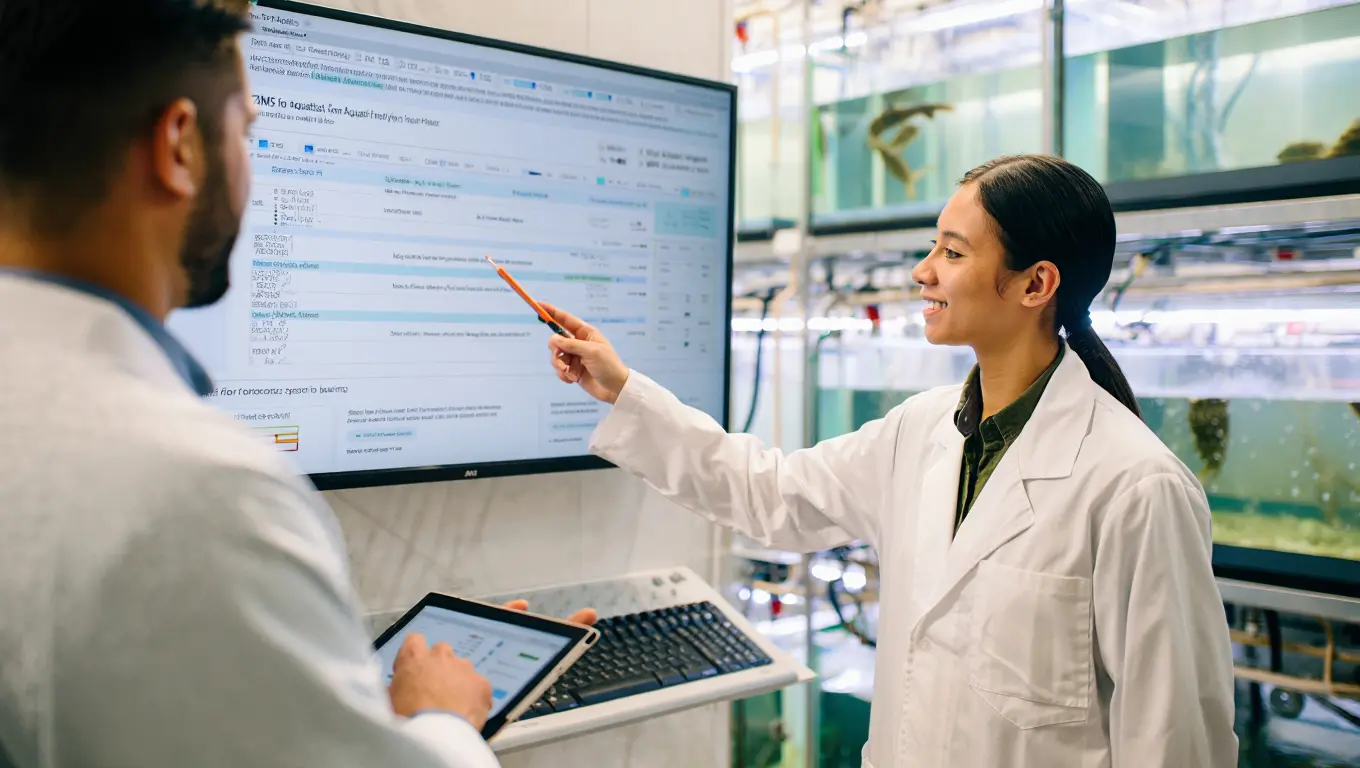
ZIMS for Aquatics was introduced to address these challenges by centralising animal records in a single digital system. Health observations, biological data, and breeding records could be recorded in a consistent format and accessed by relevant teams.
This implementation focused on aligning existing workflows with a shared information framework rather than replacing established care practices.
Building a Complete Animal History
One of the first benefits observed was the ability to view complete animal histories in one place. Health events, treatments, and outcomes could be reviewed alongside breeding records and life stage changes.
This holistic view supported better understanding of how health factors influenced reproductive success over time.
Improving Health Monitoring Through Better Data
Health monitoring in aquatic species often relies on subtle indicators rather than obvious symptoms. Changes in behaviour, appetite, or appearance can signal underlying issues.
ZIMS for Aquatics supports health monitoring by allowing teams to record observations consistently and review them over time. Patterns that might not be obvious in isolation become clearer when viewed across multiple records.
Identifying Trends Early
By reviewing historical health data, care teams were able to identify recurring issues linked to specific conditions or life stages. This insight supported earlier intervention and more targeted care decisions.
Early identification reduced the likelihood of issues escalating and supported more stable health outcomes across populations.
Linking Health Data to Breeding Outcomes
Breeding success is influenced by many factors, including health status, age, environmental conditions, and social dynamics. ZIMS for Aquatics allows institutions to examine how these factors interact.
By linking health records with breeding events, teams gained insight into:
- The impact of prior health issues on reproduction
- Recovery periods needed before breeding attempts
- Long-term reproductive performance of individuals or groups
This information supported more informed breeding planning and improved success rates over time.
Supporting Evidence-Led Breeding Decisions
Rather than relying solely on short-term observations, teams could review long-term data when planning breeding programmes. This evidence-led approach reduced uncertainty and supported more consistent outcomes.
Decisions about timing, pairing, and environmental adjustments were informed by documented experience rather than assumption.
Enhancing Collaboration Across Teams
One of the most significant changes observed was improved collaboration between animal care staff, veterinarians, and collection managers. With shared access to the same information, discussions became more focused and productive.
ZIMS for Aquatics supported collaboration by:
- Providing a single source of truth
- Reducing duplication of record-keeping
- Supporting clear communication across roles
- Ensuring continuity when staff change
This shared understanding strengthened decision-making and accountability.
Improving Continuity Over Time
As staff roles evolved, institutional knowledge remained accessible. New team members could review historical records and understand past decisions, supporting continuity in care and breeding management.
Measuring Change Over Time
The value of digital records became more apparent over longer periods. With consistent data collection, institutions could measure changes in health and breeding outcomes across years.
Examples of measurable improvements included:
- More stable breeding success rates
- Reduced recurrence of preventable health issues
- Better understanding of species-specific needs
- Increased confidence in long-term planning
These outcomes reinforced the importance of structured information management.
Supporting Broader Conservation Goals
Improved health and breeding outcomes contribute to broader conservation objectives. Healthy, sustainable populations support research, education, and coordinated management across institutions.
By maintaining high-quality records, aquariums contribute data that can inform collaborative conservation efforts beyond individual collections.
The Role of Species360 in Supporting Outcomes
Species360 supports aquariums by providing systems that prioritise shared data, collaboration, and long-term insight. Through ZIMS for Aquatics, Species360 enables institutions to connect daily animal care with population-level understanding.
This support helps aquariums align local management decisions with global conservation priorities.
Lessons Learned From the Case Study
Several key lessons emerged from this case study:
- Centralised records improve visibility across health and breeding data
- Long-term data supports better planning and evaluation
- Collaboration strengthens outcomes when information is shared
- Consistency in record-keeping increases confidence in decisions
These lessons are relevant to aquariums of all sizes and collection types.
Moving Toward More Predictable Outcomes
Health and breeding outcomes will always involve some uncertainty, particularly in complex aquatic environments. However, structured data reduces that uncertainty by providing evidence to guide decisions.
ZIMS for Aquatics supports more predictable outcomes by connecting observations, actions, and results over time.
From Information to Impact
The experience highlighted in this case study shows how information management directly influences animal outcomes. When health and breeding data are accessible, consistent, and shared, institutions are better equipped to support animal welfare and population sustainability.
Aquariums exploring ways to strengthen their data practices and outcomes can find out more by visiting our Contact Us page.

Effective conservation does not occur in isolation; it thrives through collaboration. Partnering with Species360 to aggregate global data on reproductive patterns and population dynamics is crucial for evidence-based conservation and the long-term sustainability of managed populations across institutions, maximizing global impact.
Maria Franke, Director, Applied Conservation, Toronto Zoo