Introducing the Reproduction Dashboard in Taxon Profiles!
By
Gavrielle Kirk-Cohen
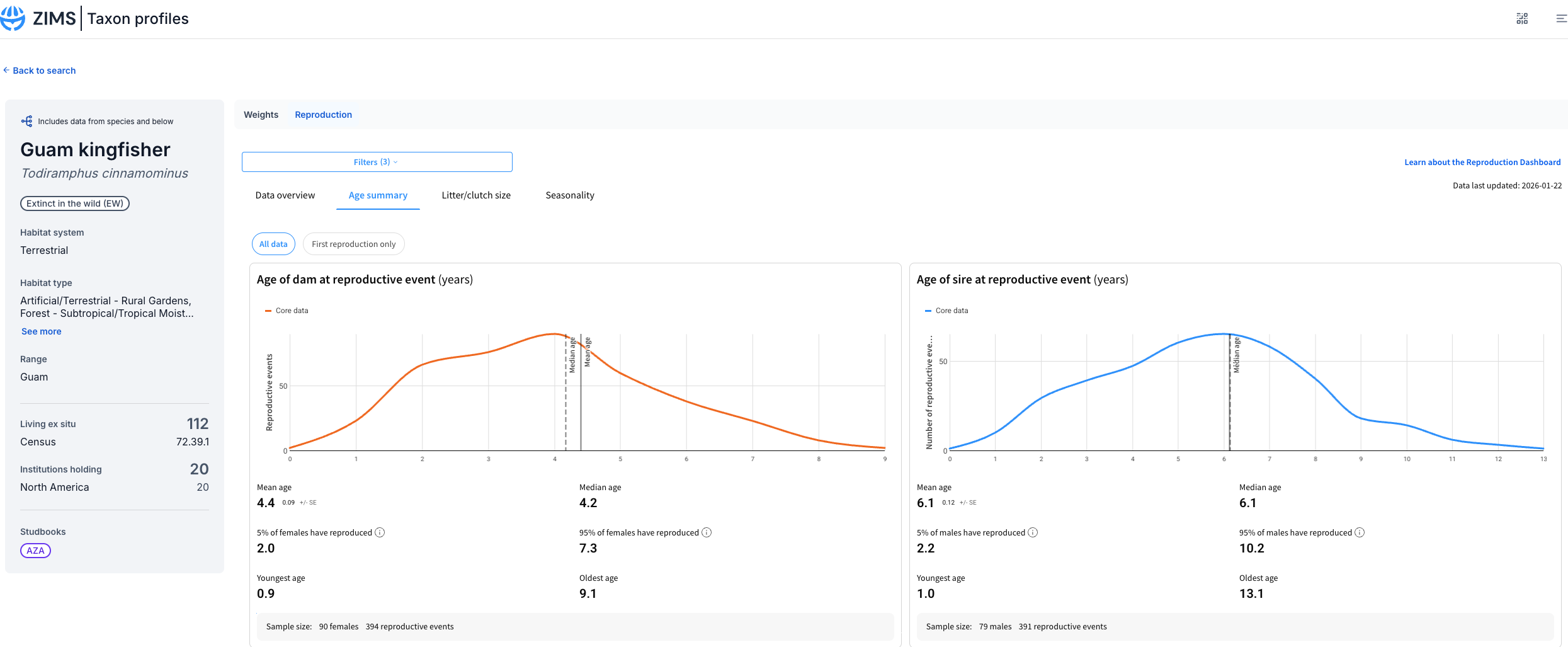
A look at the Reproduction Dashboard in Taxon Profiles for the Guam kingfisher, providing an age summary of males and females for reproductive events.
Species360 is excited to share the first major ZIMS release of 2026: the Reproduction Dashboard, now available in Taxon Profiles.
The Reproduction Dashboard provides a wealth of data on reproduction for over 12,000 species supporting smarter collection planning and improved animal welfare, and enabling members to make evidence-based decisions for the animals in their care.
What’s included in the Reproduction Dashboard?
The dashboard is organised into four tabs:
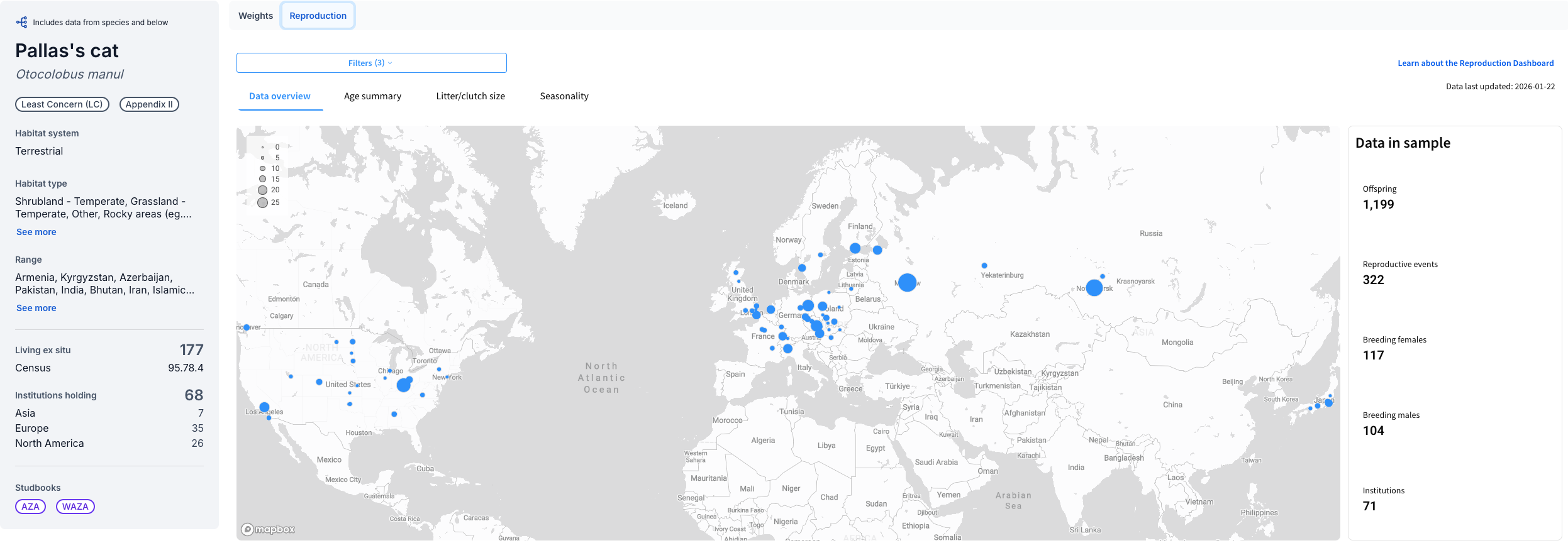
Reproduction Summary An at-a-glance overview for each species, including sample size, number of reproductive events, offspring counts, and a global map of reproductive events at Species360 member institutions.
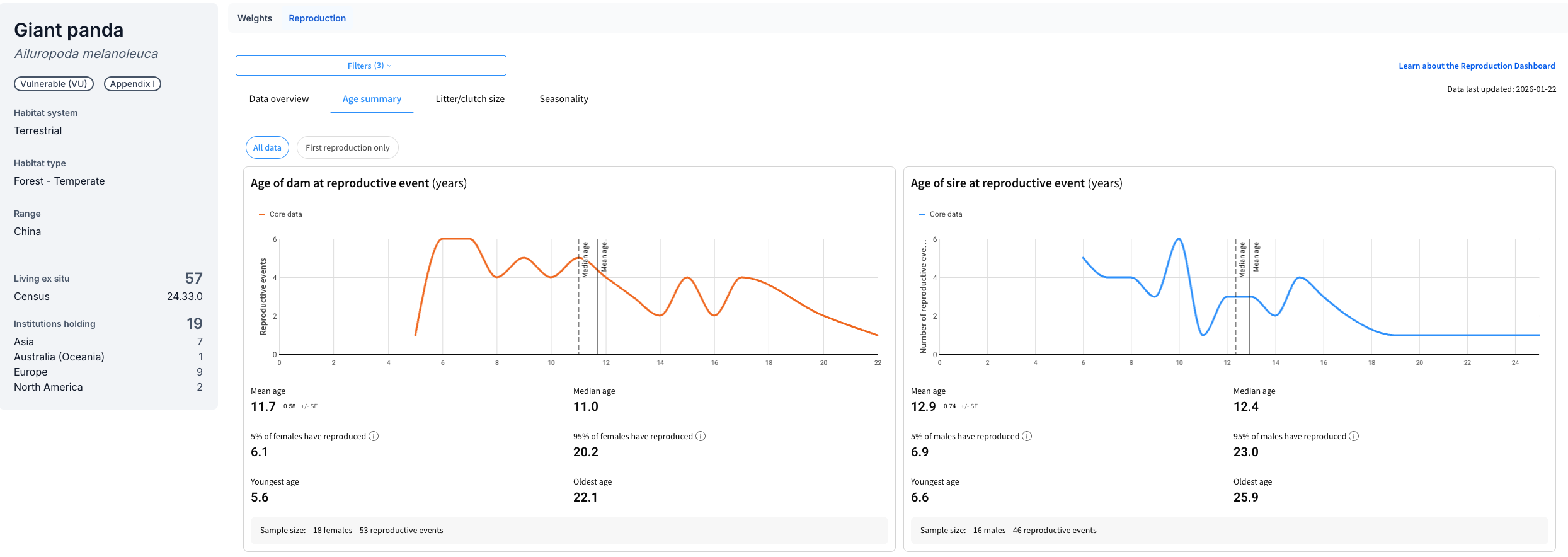
Age of Reproduction Displays the ages at which males and females reproduce, including mean and median ages.
Litter / Clutch Size Shows the average number of offspring per litter or clutch.
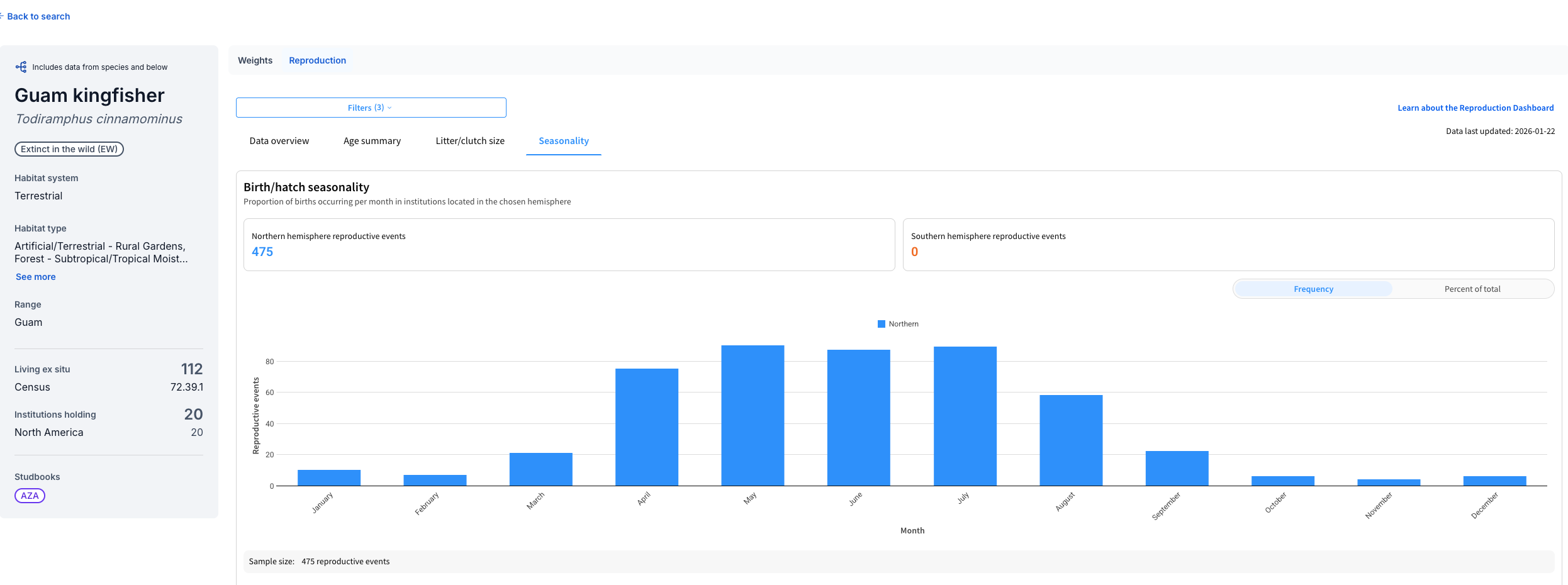
Seasonality Illustrates the proportion of births by month, based on institutions in the selected hemisphere.
Reproduction summary for Pallas's cat.
This new interactive dashboard in Taxon Profiles is a significant improvement to the previous Survival, Reproduction and Growth reports in ZIMS, providing in-depth, regularly updated data. It makes use of new technology called Sigma, which allows for more engaging, interactive, current dashboards. Our Product, Science, and Data teams have worked tirelessly to enhance analytics and reporting capabilities, offering our members a more comprehensive and insightful tool for managing species data.
The Reproduction Dashboard features numerous filters which allow users to exclude or include data, and to focus on specific regions, time frames and taxonomies. This flexibility makes it easier to focus on the most relevant species data for your institution or programme.
Additionally, a unique URL is available for each species’ page, meaning users can bookmark the links to their favourites to return to later or share the link with others for quick access.
Age summary for giant panda, displaying data on age of males and females at the time of reproductive event.
The Reproduction Dashboard is a useful tool that transforms historical data into clear visual trends that can empower institutions to make data-driven decisions regarding breeding, reproduction and animal welfare.
Examples of how to use the Reproductive Dashboard analytics include, but are not limited to:
Reproduction Longevity: Identify the typical age ranges for reproduction, including the youngest and oldest recorded instances of reproduction for both males and females.
Litter and Clutch dynamics: View typical litter or clutch sizes to better plan for reproduction events.
Distribution Trends: Visualize the spread of reproduction across different ages and the peak ages of reproduction to understand the likelihood of reproduction at any life stage.
Proactive Veterinary Care: Pinpoint exactly when to incorporate breeding exams into animal care plans based on reproduction span.
Contraceptive Management: Determine when to initiate or discontinue birth control protocols.
Strategic Planning: Use reproductive peaks to guide decisions on animal transfers, diet modifications, and neonatal separations.
Resource Allocation: Prepare for the logistical demands of new species, from ensuring enclosure space for offspring to planning for potential hand-rearing scenarios.
Enrichment and enclosure design: Adjust enrichment and habitat design to reflect the changing needs of animals as they move through different reproductive life stages.
Graph displaying hatch seasonality for Guam kingfisher.
Taxon Profiles makes use of the aggregated and anonymised data in ZIMS, entered by our membership, providing a comprehensive platform to view information on species such as weights, reproduction, species holdings, studbooks, IUCN status, and CITES appendix listings.
Jim Guenter, Species360 CEO, said: “We are excited to release the new and improved Reproduction Dashboard in ZIMS. This is a truly unique resource, providing a wealth of data not found anywhere else. And it is made possible thanks to the data added to ZIMS every day by our more than 1,400 members around the world.”
The Reproduction Dashboard was made possible thanks to the generous support of the Toronto Zoo. Species360 gratefully thanks the Toronto Zoo for being a Species360 Conservation Impact Partner and helping support vital development work that benefits Species360 members around the world, as well as the animals they care for.
Effective conservation does not occur in isolation; it thrives through collaboration. Partnering with Species360 to aggregate global data on reproductive patterns and population dynamics is crucial for evidence-based conservation and the long-term sustainability of managed populations across institutions, maximizing global impact.
Maria Franke, Director, Applied Conservation, Toronto Zoo
Institutions like the Toronto Zoo make innovations like the Reproduction Dashboard possible. If your organization is committed to improving animal care and supporting smarter conservation action, consider partnering with Species360 to accelerate this work for the global community.
Coming soon!
Our Conservation and Science and Data teams are evaluating data for a new Survival Dashboard which will be added to Taxon Profiles. Stay tuned for further updates.
Additionally, we will host a webinar in March on Taxon Profiles, providing an in-depth look at the tool, and answer your questions. We will announce details and registration soon.