Mobile-First Animal Management Software for On-Ground Staff
- By Species360
The Reality Gap Between Systems and Field Execution
Most operational systems in animal care are designed from an administrative perspective.
They assume:
- Stable working environments
- Desk-based access to systems
- Time availability for documentation after tasks
None of these assumptions hold on the ground.
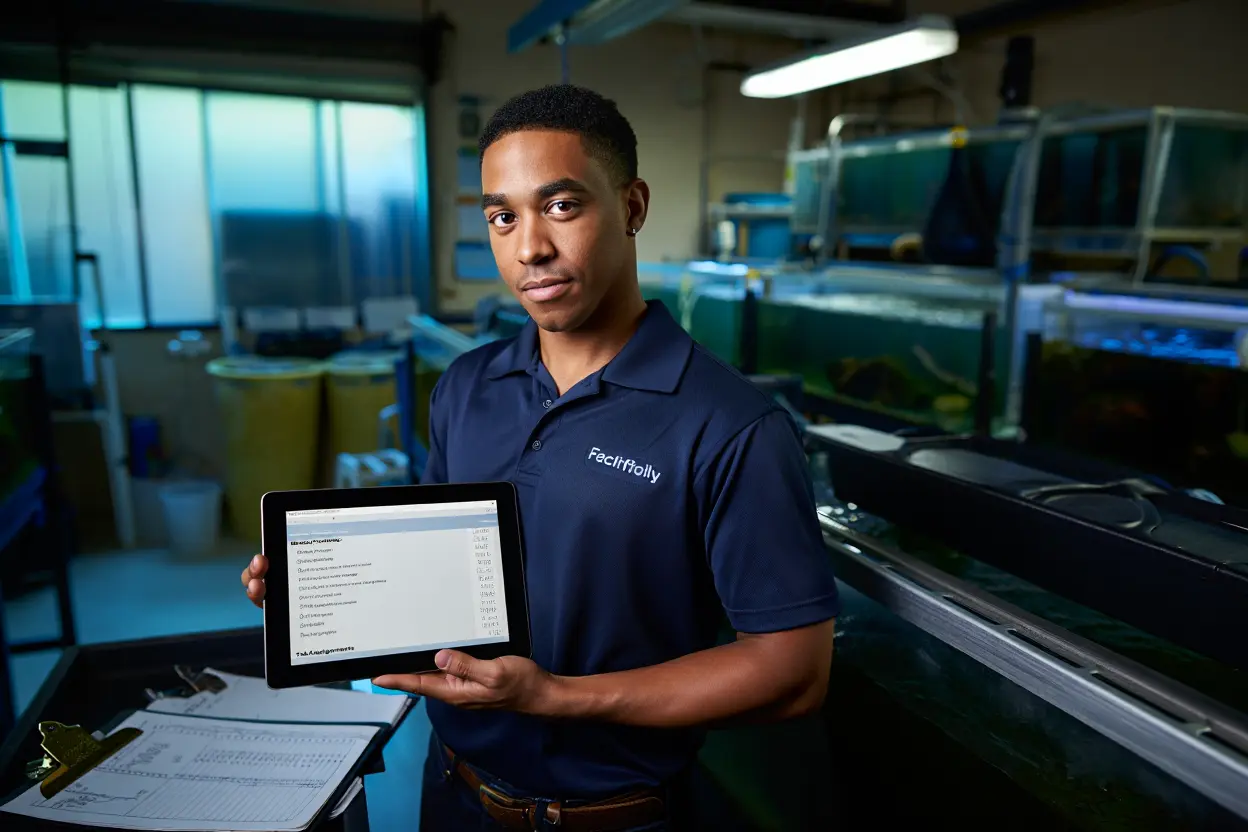
Keepers operate in dynamic, physically demanding environments. They move between enclosures, respond to unpredictable animal behaviour, and make decisions in real time. Their priority is execution, not documentation.
This creates a fundamental disconnect.
Systems that are not designed for on-ground use become secondary. Staff revert to informal methods, relying on memory, handwritten notes, or delayed data entry.
This is where most software implementations fail.
The problem is not functionality. It is accessibility at the point of work.
Why Desktop-First Systems Break in Animal Care Environments
Traditional software systems are often built for desktop use. They assume that users will:
- Complete tasks first
- Return to a workstation
- Enter data retrospectively
This workflow introduces several failure points.
First, delay. Information is recorded after the fact, increasing the risk of inaccuracies.
Second, omission. Tasks performed under pressure may never be documented.
Third, fragmentation. Notes taken in the field must be transferred later, creating duplication and inconsistency.
These issues are not minor inefficiencies. They directly impact data quality, operational visibility, and decision-making.
Desktop-first systems are not inherently flawed. They are simply misaligned with the realities of field-based work.
Mobile-First Design as an Operational Requirement
Mobile-first design addresses this misalignment by placing the system directly in the hands of on-ground staff.
This is not about convenience. It is about enabling execution and documentation to occur simultaneously.
Mobile-first animal management software allows staff to:
- Access task lists in real time
- View instructions within context
- Record actions at the point of execution
- Capture observations immediately
Systems designed with this approach, such as animal management software, ensure that operational workflows are not interrupted by the need to access separate devices or locations.
The system becomes part of the work environment rather than an external layer.
Eliminating the Gap Between Action and Data Capture
The delay between performing a task and recording it is one of the most persistent sources of data inaccuracy.
Mobile-first systems eliminate this gap.
When a keeper feeds an animal, the record is updated immediately. When an observation is made, it is logged in real time. When a task is completed, it is marked within the system at that moment.
This creates a continuous data stream.
The benefits are immediate.
Accuracy improves because information is captured while it is still fresh. Completeness increases because documentation is integrated into the workflow. Visibility expands because data is available instantly.
This transforms data from a retrospective record into a real-time operational asset.
Supporting Decision-Making in Dynamic Environments
On-ground staff make decisions constantly.
They adjust feeding based on behaviour. They respond to environmental changes. They escalate issues when conditions deviate from expected patterns.
These decisions require access to information.
Mobile-first systems provide:
- Instant access to animal histories
- Visibility into recent observations
- Context for current tasks
This allows staff to make informed decisions without leaving the field.
Instead of relying on memory or incomplete information, they operate with full context.
This improves both speed and accuracy of response.
Reducing Friction in Daily Workflows
Adoption of any system depends on how well it fits into existing workflows.
If using the system creates additional effort, staff will avoid it.
Mobile-first design reduces friction by aligning with how work is actually performed.
Key characteristics include:
- Simple interfaces that can be used quickly
- Minimal steps required to complete actions
- Offline functionality for environments with limited connectivity
- Fast data entry methods suitable for field conditions
These features are not enhancements. They are requirements for consistent usage.
Without them, even the most advanced systems will fail at the execution level.
The Risk of Partial Adoption in Non-Mobile Systems
One of the most common outcomes of non-mobile systems is partial adoption.
Staff may use the system for certain tasks but revert to manual methods for others.
This creates a hybrid environment.
Some data is structured and accessible. Other data remains fragmented and inconsistent.
Hybrid systems are often more problematic than fully manual ones because they create false confidence in data completeness.
Mobile-first systems reduce this risk by making it easier to use the system for all tasks, not just those that are convenient to document.
Impact on Data Quality and Institutional Insight
Data quality is directly linked to how and when data is captured.
Mobile-first systems improve data quality by:
- Ensuring consistency in input
- Reducing delays in recording
- Minimising data loss
Over time, this creates a more reliable dataset.
This has strategic implications.
High-quality data supports:
- Better veterinary decisions
- More accurate research
- Stronger reporting and compliance
Institutions with reliable data are better positioned to secure funding, demonstrate impact, and support conservation initiatives.
Operational Efficiency Beyond Time Savings
Mobile-first systems are often justified in terms of time savings. While this is valid, it understates their impact.
The real value lies in operational alignment.
When execution and documentation occur in the same workflow:
- Redundant tasks are eliminated
- Information flows without interruption
- Coordination becomes simpler
This creates a more efficient system overall.
Efficiency is not just about speed. It is about reducing complexity and improving consistency.
Challenges in Implementing Mobile-First Systems
Despite clear benefits, mobile-first implementation is not without challenges.
Common issues include:
- Device management and maintenance
- Connectivity limitations in certain environments
- Resistance from staff unfamiliar with mobile systems
- Security concerns related to data access
These challenges are manageable but require planning.
Successful implementation involves:
- Selecting appropriate devices
- Ensuring offline capabilities
- Providing training and support
- Establishing clear usage protocols
Without addressing these factors, adoption may be inconsistent.
Balancing Technology With Practical Constraints
Technology must adapt to the environment in which it is used.
In animal care settings, this means accounting for:
- Physical conditions such as weather and terrain
- Time constraints during critical tasks
- The need for quick, intuitive interactions
Mobile-first systems that fail to account for these factors will struggle.
The most effective solutions are those that integrate seamlessly into daily routines without adding complexity.
From Accessibility to Operational Control
Mobile-first design is often positioned as a usability feature. In reality, it is a control mechanism.
By enabling real-time access and data capture, it ensures that:
- Tasks are executed and recorded consistently
- Information is available across the organisation instantly
- Decision-making is based on current data
This creates a level of operational control that is not possible with delayed or fragmented systems.
The Strategic Importance of Field-Level Integration
For leadership teams, mobile-first systems represent more than a technical upgrade.
They create alignment between:
- Strategic objectives
- Operational execution
- Data-driven decision-making
When field-level activity is captured accurately and consistently, it feeds directly into higher-level analysis.
This ensures that strategic decisions are grounded in real operational data.
Without this alignment, organisations operate with incomplete information.
Conclusion
Animal care operations do not happen at desks. They happen in the field.
Systems that fail to integrate into this environment create gaps between execution and documentation, reducing both accuracy and visibility.
Mobile-first animal management software closes this gap.
It enables real-time data capture, supports on-ground decision-making, and aligns operational workflows with system capabilities.
For organisations seeking to improve data quality, operational efficiency, and overall control, mobile-first design is not optional. It is essential.
To explore how mobile-first systems can be implemented effectively within your organisation, the next step is to get in touch and assess how field-level integration can transform your operations.

Effective conservation does not occur in isolation; it thrives through collaboration. Partnering with Species360 to aggregate global data on reproductive patterns and population dynamics is crucial for evidence-based conservation and the long-term sustainability of managed populations across institutions, maximizing global impact.
Maria Franke, Director, Applied Conservation, Toronto Zoo