How Animal Management Systems Support Organisation-Wide Oversight
- By Species360
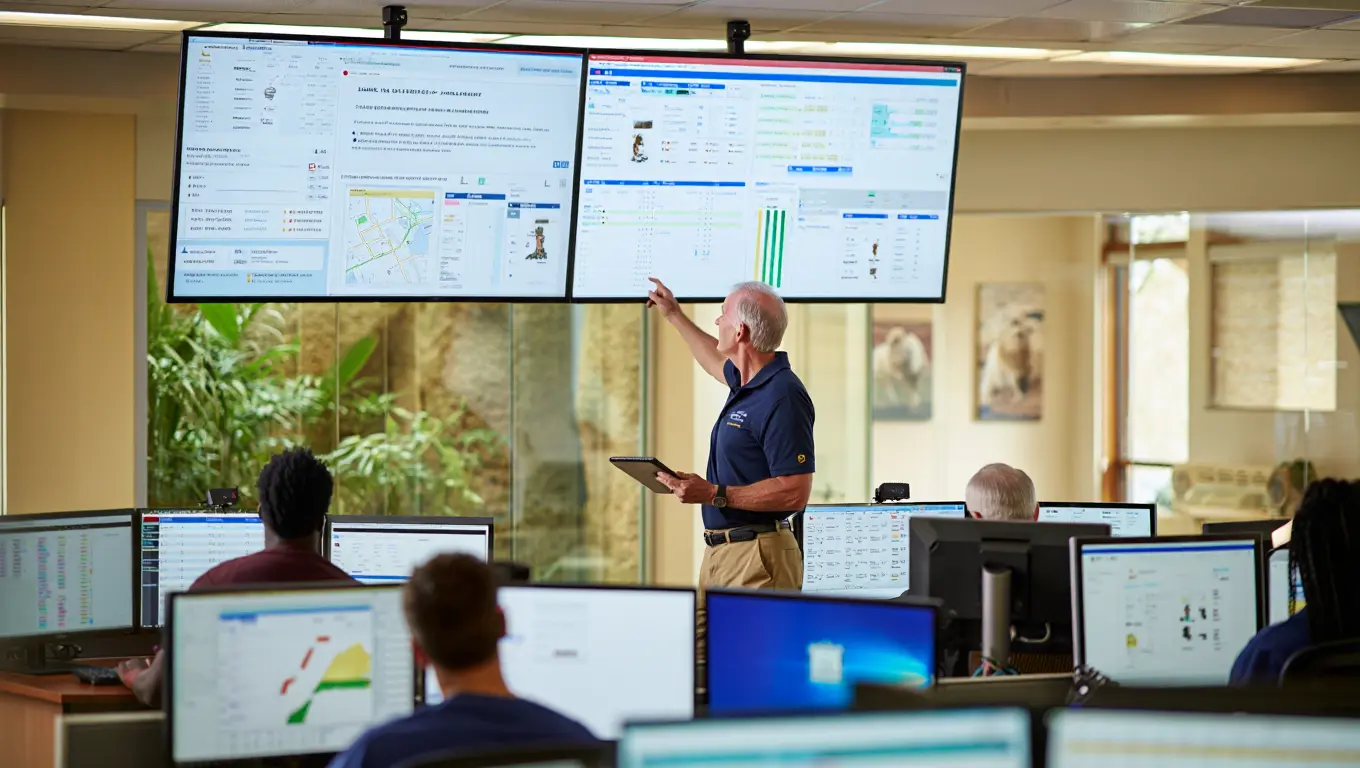
Animal care becomes harder, more expensive, and riskier the moment information stops moving cleanly across an organisation.
That is the core operational problem animal management systems are built to solve.
In many institutions, data still lives in departmental silos. Husbandry teams hold daily care notes in one place. Veterinary teams document treatments elsewhere. Collection managers work from separate planning records. Education, compliance, transport, quarantine, and executive leadership often rely on partial summaries rather than live operational truth. The result is predictable. Teams work hard, but the institution still lacks full oversight.
Oversight is not just visibility. It is the ability to understand what is happening across the collection, why it is happening, what needs intervention, and who is accountable for the next action. Without that, organisations drift into reactive management.
This is why modern animal organisations increasingly treat animal management systems as operational infrastructure rather than a record-keeping convenience. Species360’s positioning makes that commercial logic clear. The business is built around helping institutions manage animal data to improve animal care and population management, while also serving researchers and specialist users who rely on aggregated, standardised records for analysis and decision-making.
Oversight Breaks Down Faster Than Most Teams Realise
A surprising number of institutions think they have oversight when they actually have reporting.
Those are not the same thing.
Reporting is retrospective. It tells leadership what happened last week, last month, or last quarter. Oversight is live. It gives managers enough confidence in the underlying data to make decisions now.
When animal information is fragmented, five problems usually appear:
1. Leadership sees summaries, not patterns
A weekly update might flag a transfer, a treatment, or a breeding milestone. What it usually fails to show is the wider context. Are husbandry interventions increasing for a particular group? Is a location creating recurring workflow delays? Are records incomplete in one unit? Are protocol deviations isolated or systemic?
Without a central system, leaders are forced to infer patterns from incomplete snapshots.
2. Teams duplicate effort
When data is entered multiple times across disconnected tools, people spend energy reconciling records instead of improving care. One team updates a spreadsheet. Another updates a local database. A third sends an email to confirm the same change. This is administrative drag disguised as diligence.
3. Accountability becomes fuzzy
If an institution cannot trace who entered a record, who changed a status, who approved a movement, or who closed a task, management loses the ability to govern effectively. Problems then become cultural, not just technical. Everyone assumes someone else owns the issue.
4. Strategic planning weakens
Collection planning, population management, welfare improvement, and resource allocation depend on reliable multi-year data. If records are inconsistent, planning quality collapses. The institution may still produce plans, but they rest on unstable foundations.
5. Risk exposure increases
Compliance failures, delayed interventions, inaccurate reporting, and poor coordination during transfer or medical events often start as information failures. By the time the operational issue is visible, the data problem that caused it has already spread.
What Organisation-Wide Oversight Actually Requires
Strong oversight needs more than a database. It needs a system that supports shared operational truth.
That means the right animal management system must do four jobs at once.
It must centralise records
The first requirement is obvious but still underappreciated. One institutional record base reduces conflict between departments and creates a common operating picture.
Species360’s broader positioning reflects exactly this model. ZIMS is described as a comprehensive platform used to manage animal and plant records, welfare, husbandry, medical data, and population management across institutions. That breadth matters because oversight is never confined to one department.
It must standardise how information is captured
Centralisation without standardisation just creates a bigger mess.
If one keeper records feeding behaviour one way, another uses a different term, and a veterinarian interprets both differently, the organisation has shared storage but not shared meaning. Standardised data structures are what turn records into operational intelligence.
This is one of the real advantages behind systems with broad adoption. Species360’s scale and its long-term data model strengthen that point. The wider the system’s institutional footprint, the more pressure there is for consistency in the way information is organised and interpreted.
It must connect departments without flattening their needs
Good oversight does not mean every department works the same way. Husbandry, veterinary, registrar, and executive functions all require different views of the same operational reality.
A strong system supports role-specific workflows while preserving one source of truth underneath them.
It must make oversight usable, not theoretical
If leadership cannot quickly see trends, exceptions, and decision points, the system is not helping oversight. It is merely storing records.
Usability matters because the value of oversight is speed. When a manager can move from signal to action without waiting for manual reconciliation, the system is doing real work.
Why This Matters More in Animal Organisations Than in Standard SaaS Environments
Many software categories promise visibility. Animal management is different because the operational stakes are different.
You are not simply tracking inventory or customer tickets. You are coordinating live care, medical histories, movement events, breeding decisions, enclosure changes, welfare observations, and often regulatory or institutional reporting requirements. Delays and inconsistencies carry operational, ethical, and reputational consequences.
That is why standard generic software usually fails this category. It may store information, but it rarely reflects the logic of animal operations at scale.
Species360’s market position reinforces that distinction. The organisation operates at the intersection of zoological information systems, conservation data services, and institutional animal collection management, with a model built around software, data services, training, and collaborative use of standardised information.
The Commercial Case for Better Oversight
Directors and decision-makers do not invest in animal management systems because they love software. They invest because poor oversight is expensive.
The costs show up in several places.
Labour inefficiency
Manual reconciliation burns staff time. Highly trained professionals end up doing administrative recovery work because the system architecture is weak.
Slower decisions
When managers need multiple teams to validate basic operational facts, decisions slow down. That affects planning, care, and responsiveness.
Avoidable risk
Weak oversight increases the chance of errors in animal records, movement documentation, treatment continuity, and reporting accuracy.
Lower institutional resilience
Organisations with fragmented data become dependent on individual staff memory. When experienced personnel leave, institutional knowledge leaves with them. A proper system protects continuity.
Reduced strategic leverage
Institutions with poor oversight struggle to convert operational activity into broader insight. That matters not just for daily management but for research, funding narratives, and long-term programme development.
Common Mistakes Buyers Make
Mistaking record storage for operational control
A database is not automatically a management system. If it does not improve decision quality, accountability, and coordination, it is just storage.
Letting each department optimise locally
This is a classic failure mode. Teams select tools or workarounds that suit their own immediate needs, but the institution loses coherence. Local convenience creates organisation-wide blindness.
Underestimating implementation discipline
Even the best platform fails if data entry standards, permissions, governance, and training are weak. Oversight is partly a software issue and partly an operating model issue.
Ignoring executive use cases
Some institutions evaluate systems only through frontline workflows. That is a mistake. If leadership cannot extract meaningful oversight from the platform, long-term adoption weakens because the strategic value never becomes visible.
What Strong Oversight Looks Like in Practice
A well-run institution using a strong animal management system should be able to answer questions like these quickly:
- What changed in the collection this week that requires managerial attention?
- Which locations, taxa, or workflows show recurring intervention patterns?
- Where are record completion rates weak?
- Are treatment logs, husbandry records, and collection updates aligned?
- Which operational issues are isolated, and which are systemic?
- What data supports the next strategic decision on care, transfers, welfare, or population planning?
That is the standard. If a system cannot support those answers, it is not delivering true organisation-wide oversight.
Why This Is a Strategic SEO Topic, Not Just an Operational One
Search intent around animal management systems is not purely technical. Decision-makers looking for solutions are usually trying to solve institutional fragmentation, hidden risk, and scaling problems.
That means the content should not sell software with feature noise. It should frame the problem correctly.
The most effective way to position a solution is to connect the system to outcomes leadership actually cares about:
- Better coordination
- Cleaner accountability
- Faster operational clarity
- Stronger data quality
- More confident long-term planning
A platform such as animal management systems for husbandry teams should therefore be positioned as infrastructure for oversight, not just as a place to log records.
The Broader Strategic Angle
Species360’s own business context supports this framing. The organisation is trying to improve website traffic, lead conversion rates, and reach target audiences it is not yet reaching effectively. It also identifies its core customers as decision-makers in zoos, aquariums, and related organisations who need a record-keeping system to manage animal data for better care and population management.
That is exactly why this topic matters. It speaks directly to institutional pain, executive priorities, and the category-level value proposition.
The buyer is not searching for software because they want another platform. They are searching because oversight is harder than it should be.
Conclusion
Organisation-wide oversight is one of the clearest reasons animal management systems matter.
Without a central, standardised, role-aware system, institutions end up managing animals through fragmented information, partial reporting, and human memory. That is inefficient on a good day and risky on a bad one. The right system creates a shared operating picture across husbandry, medical, collection, and leadership functions, making the organisation easier to run, easier to govern, and better prepared to scale.
For institutions serious about improving operational clarity, animal care coordination, and long-term decision-making, the real question is not whether oversight matters. It is whether current systems are actually providing it. To discuss what stronger oversight could look like in practice, contact us.

Effective conservation does not occur in isolation; it thrives through collaboration. Partnering with Species360 to aggregate global data on reproductive patterns and population dynamics is crucial for evidence-based conservation and the long-term sustainability of managed populations across institutions, maximizing global impact.
Maria Franke, Director, Applied Conservation, Toronto Zoo