A bit of history: Celebrating 50 years with a look back at animal records… before computers!
By
Mary Ellen Amodeo
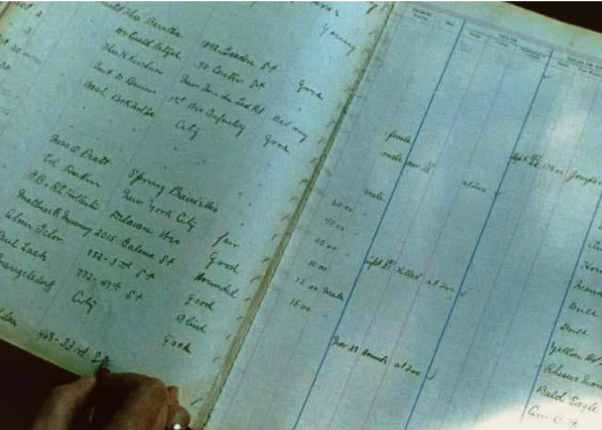
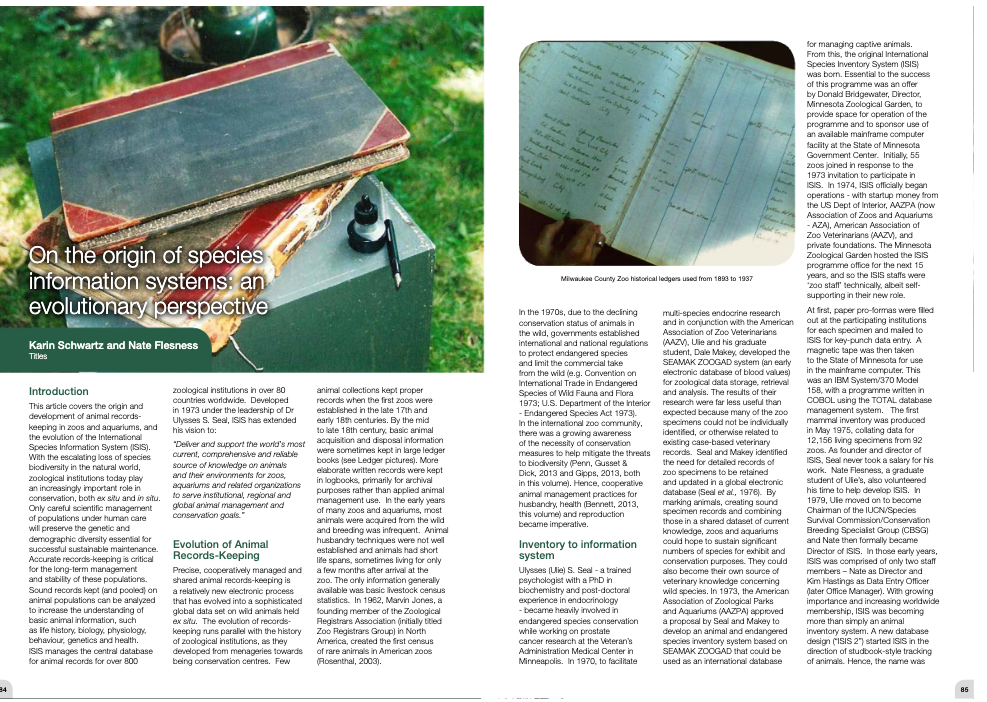
Milwaukee County Zoo historical ledgers used from 1893 to 1937. From “On the origin of species information systems: an evolutionary perspective,” by Karin Schwartz and Nate Flesness.
This week, Species360 announced that data recorded and shared by zoos, aquariums, refuges and conservation agencies now enables the IUCN Red List website to reflect whole populations — including those in the wild and in human care. For rare and endangered species, this update is a critical asset within the One Plan Approach to conservation of species. Just 50 years ago, this would not have been possible.
Dr. Ulysses S. Seal, professor of Biochemistry and Wildlife, built a network of zoo and aquarium contacts — and ultimately proposed, along with Dale Makey, the formation of what today is nonprofit Species360.
At that time, individual animals in zoos and aquariums were kept on paper and filed within the institution. There was no universal animal identification system, and medical records were not necessarily connected to historical data for either the individual or the species.
For wildlife veterinarians, the lack of data not only hampered abilities to connect with others treating similar species. It made it impossible to compare and understand blood and serum norms for a species and age. In the 1960’s and 1970’s, polymath professor of Biochemistry and Wildlife Dr. Ulysses S. Seal confronted the challenge during studies of comparative biochemistry and endocrinology and cancer. To gather data, Dr. Seal narrowed his focus to rare and endangered species and built a network of zoo contacts to provide samples.
But when returning for comparative samples of the same animal in the following years, to see the effects of age, hibernation season, pregnancy, and other variables, Dr. Seal found that zoos generally could NOT identify that same animal. The lack of comparative data left a gapping whole in the knowledge of species, aging, reproduction, disease and mortality.
In 1973, at the AAZV annual meeting and again at the AZA (then AAZPA) annual conference, Ulysses S. Seal and grad student Dale Makey proposed a solution that would bridge the knowledge gap: to build an animal records and collection inventory computer system with marked-animal specimen records to support the veterinary and biochemical data going forward, and to generate a pooled animal inventory. Called the International Species Inventory System, or ISIS, the proposal garnered immediate support from both AAZV and AZA.
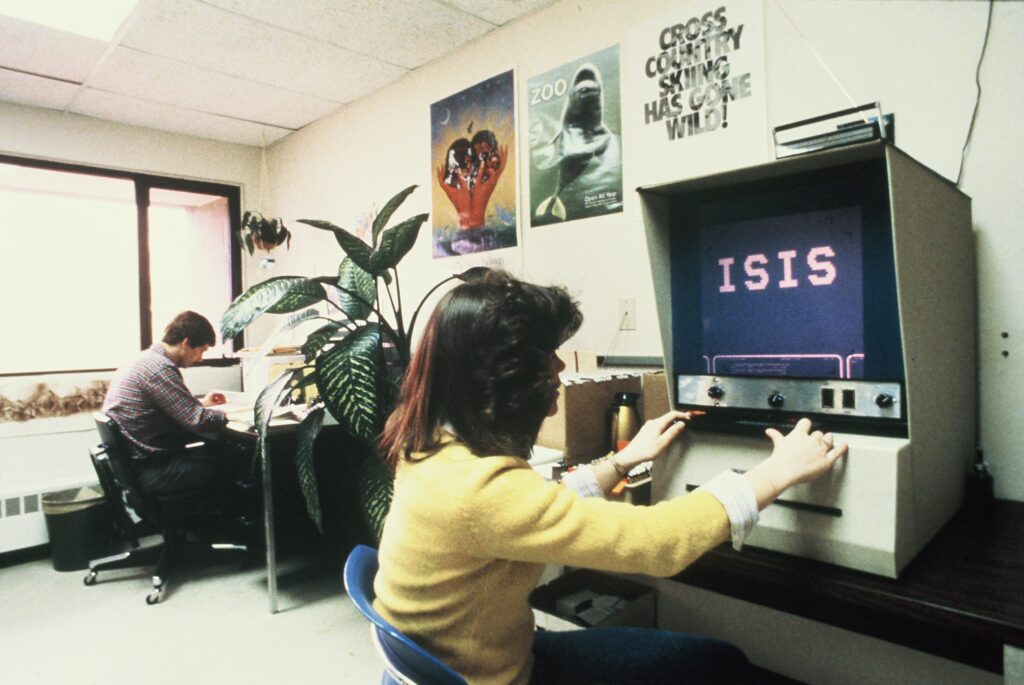
The original Species360 (then ISIS) office in Minnesota Zoo.
For zoos that had a computer, the team provided a standardized format, written in COBALT. For zoos without access to a computer, paper forms were used and mailed to Dr. Seal and Makey, with individuals based at the just-founded Minnesota Zoo helping to enter the data into a central computer system. Ultimately, more than one million paper records would be entered in what today is the Zoological Information Management System (ZIMS).
What was the response from the zoo and aquarium community? Which institutions became the first to record and share essential data on the animals in their care?
Karin is a Ph.D. candidate in conservation biology at George Mason University with extensive experience in database management for animal records- keeping as Registrar at Milwaukee County Zoo and Biological Database Manager at Chicago Zoological Society. Karin has been instrumental in the development of international training programs for animal records-keeping through the use of the International Species Information System. She has participated in global conservation efforts as an active member of the IUCN/SSC Conservation Breeding, Tapir, and Reintroduction Specialist Groups.
Nate served as Species360’s (then ISIS) Director of Science, 2009 to date and was Executive Director from 1979 – 2009, growing Species360 from 85 members to more than 800. He conducted graduate work in molecular genetics and evolutionary biology at the University of Pennsylvania, Chicago and Minnesota. He holds a Bachelor of Chemistry degree from the University of Minnesota.