ZIMS in Research: Major international study finds zoo elephant survival has improved substantially over six decades
- By Gavrielle Kirk-Cohen
A new study published today in Scientific Reports draws on more than six decades of data from the Species360 Zoological Information Management System (ZIMS) to show that elephants living in modern zoos are surviving significantly longer than they did in the 1960s. The research, led by ZSL (the Zoological Society of London) with Species360, the University of Southern Denmark, and the Max Planck Institute for Evolutionary Anthropology, finds that in the most recent decades, zoo elephant survival now matches or exceeds that of the wild and semi-wild populations included in the study.
Study highlights
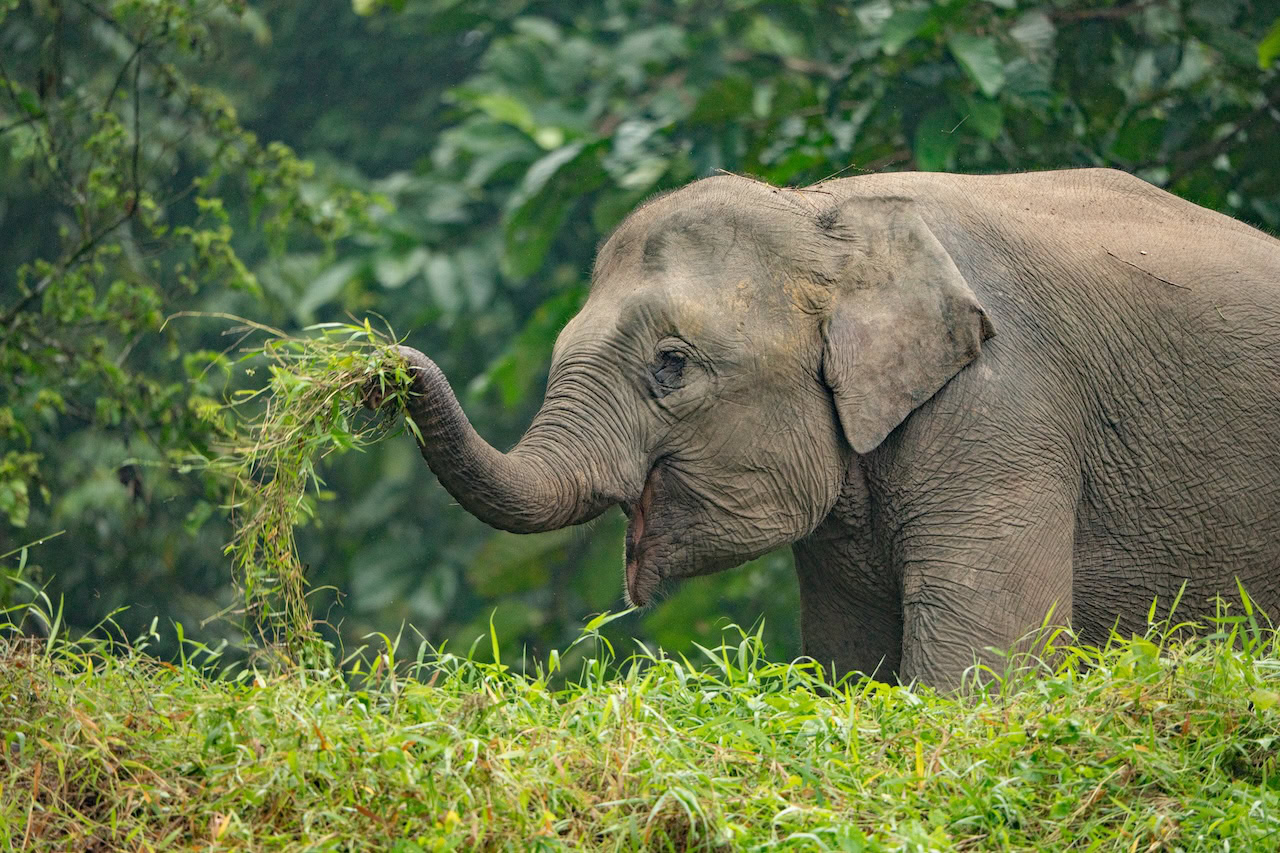
- Zoo elephant life expectancy has risen by up to 44% for males and 21% for females since 1960.
- Lifespan equality, a measure of how many individuals reach older age, also increased for females of both African and Asian elephants.
- In the most recent period studied, zoo elephant survival was comparable to, or higher than, wild African elephant populations in Kenya and semi-wild Asian elephants working in Myanmar’s timber industry.
- Infant and juvenile survival also improved, particularly for African elephants, with juvenile survival rising by 7-8%.
- The researchers analysed records for more than 3,000 African and Asian elephants held in Species360 member zoos and recorded in ZIMS.
- The gains are linked to changes in elephant management since the 1990s: larger, more complex habitats, softer flooring, enrichment, social herd structuring, and advances in veterinary care.
Read the full study: Temporal improvements in elephant longevity challenge the notion of compromised survival in zoos
Temporal improvements in elephant longevity challenge the notion of compromised survival in zoos
Elephants living in modern zoos are living significantly longer than they did half a century ago, according to a study published today in the journal Scientific Reports. The research – led by ZSL (the Zoological Society of London) in collaboration with Species360, the University of Southern Denmark, and the Max Planck Institute for Evolutionary Anthropology – finds that the life expectancy of zoo elephants has improved steadily since the 1960s, and in the most recent decades their survival now exceeds or matches that of the wild and semi-wild elephant populations included in the analysis.
The study focussed on both African and Asian elephants, and the life expectancy of both species improved on nearly every measure since 1960. The study authors found an increase of up to 21% in female zoo elephant life expectancy over time, and up to 44% for males. Lifespan equality, a measure of how many individuals reach older age, also rose for females of both species.
The study draws on the world’s largest database of animals in human care, the Species360 Zoological Information Management System (ZIMS), to offer one of the most comprehensive appraisals to date of how long elephants live in zoos, and why that has changed.
The authors indicate a potential link between the improvements in how elephants have been looked after since the 1990s, driven by increasing regional and international collaboration between zoos, resulting in advancements in elephant management and care standards. These include larger and more complex habitats, softer sand flooring that reduces foot and joint problems, the provision of a variety of browse and enrichment, opportunities to bathe, closer attention to social herd structures and socialisation that mirror those in the wild, and advances in veterinary care.
Much of this progress has been driven by the international zoo community. Regional and national zoo and aquarium associations such as the British and Irish Association of Zoos and Aquariums (BIAZA), the European Association of Zoos and Aquaria (EAZA) and the Association of Zoos and Aquariums (AZA) in America, have updated best-practice guidelines regularly since 2001, and national standards such as the UK’s Secretary of State’s Standards of Modern Zoo Practice introduced dedicated elephant requirements in 2012. This body of guidelines and legislation, illustrated in the study’s timeline of elephant management, has ramped up markedly since the early 2000s, and that concerted effort is now being reflected in the improvements in life expectancy and lifespan equality reported in the study. Because elephants are so long-lived, the authors caution, the full benefit of these changes will take several more decades to become fully visible.
The authors note that the improvements in management standards not only benefit individual welfare and survival of zoo elephants but can also provide essential information to improve species management and survival in the wild.
Study author, Fiona Sach, ZSL, said: “Our analysis shows that elephant survival in zoos has improved markedly over the past six decades. While longevity is only one component of welfare, these findings suggest that changes in husbandry, veterinary care and population management have been accompanied by measurable improvements in survival. Continued monitoring of both survival and welfare remains essential.”

“ZIMS represents the most comprehensive global repository of animal care data ever created. For this elephant research, its power lies in the consistency and standardization of survival records kept by our member institutions across over 100 countries. This enabled researchers to track 64 years of survival trends and demonstrate how they’ve improved over time, driving scientific understanding and informing policy.”
Hannah Jenkins, study co-author, and Conservation Data Lead, Species360,
Study findings
The researchers analysed records for more than 3,000 African (Loxodonta africana) and Asian elephants (Elephas maximus) held in Species360-member zoos and recorded in ZIMS. They compared two periods (1960 to 1992, and 1992 to 2024), chosen because major changes in elephant management standards came into effect after the early 1990s.
Across both species, survival improved on nearly every measure since 1960. Female life expectancy rose by up to 21%, while male life expectancy rose by up to 44%. Lifespan equality also increased for females of both species, meaning more elephants are surviving into older age. Survival of infants and juveniles improved as well, particularly for African elephants, with infant survival rates increasing 6% and 7% for females and males, and 1% for female Asian elephants. Juvenile survival in African elephants increased by 7% and 8% for females and males, respectively, and by 4% for female Asian elephants.
Crucially, these gains have closed the gap with wild elephants. In the most recent period, the survival of zoo elephants was comparable to, or higher than, that of the wild African elephant populations studied in Amboseli and Samburu in Kenya, and the semi-wild Asian elephants working in Myanmar’s timber industry. In several comparisons, zoo elephants now reach older ages than their wild and semi-wild counterparts.
A long life is not the whole story
Elephants are highly intelligent, socially complex and wide-ranging animals whose wellbeing depends on far more than survival, but also on opportunities to engage in species-specific behaviours such as foraging, walking long distances, maintaining dynamic social relationships, bathing, mud wallowing, and cognitive stimulation.
The study argues that judgements on elephant welfare should move beyond survival figures alone, towards robust, consistently applied welfare indicators, backed by stronger regulation.
Life expectancy and lifespan equality, the authors say, belong in the toolbox of measures used to assess wellbeing in zoos, and should be considered for elephants and for other species. To give a full picture, these population-level measures need to be applied alongside individual-level indicators of welfare, so that both how long animals live and how well they live are accounted for.
The study was made possible by data recorded daily by more than 1,400 Species360 member institutions across over 100 countries. The elephant records were accessed through a Species360 Research Request, drawing on ZIMS, the world’s largest database of animals in human care, built over more than 50 years.