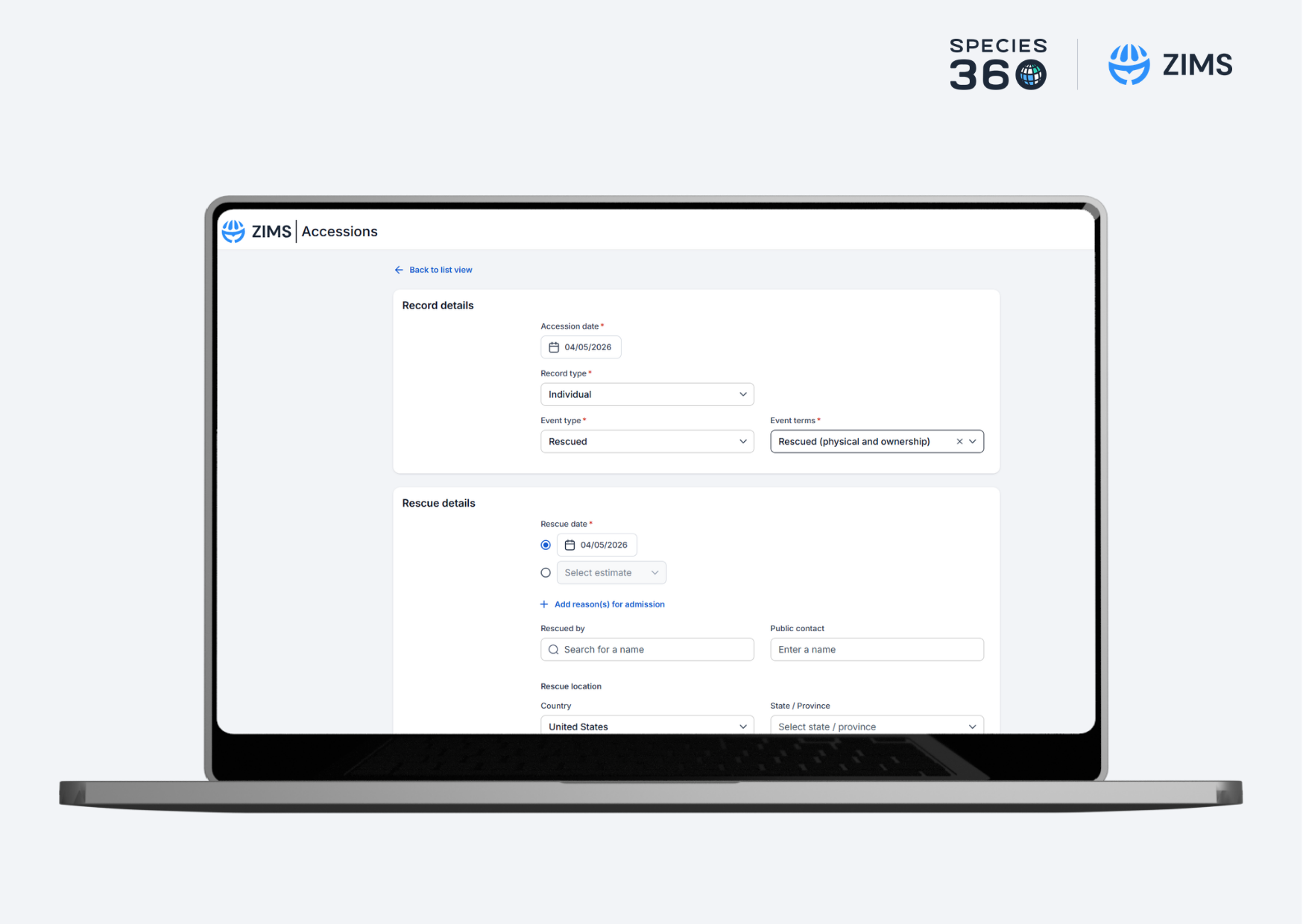
For rescue facilities, the Event type defaults to “Rescued”, while the Rescue location defaults to the country of the logged in institution, further saving time when adding data to ZIMS. Additionally, several data entry fields have been tailor made to support wildlife rescue work, such as:
- Latitude and longitude can be recorded in a single field, with easy copy/paste functionality from Google Maps.
- A new field has been added for “reasons for admission,”
- And an “age range estimate” has been added, useful for when birth information is unknown.
- Parents default to Wild but can be added if known
- Add the new animal directly onto an animal list, making it easy to find animals or keep them grouped together. (For example, when multiple animals come in from the same rescue event and you want to keep them grouped for monitoring illness, etc).
- Egg ID field available when recording an egg or group of eggs
After completing a rescue accession, you can now choose “Save and add data” to jump directly to data entry with your newly accessioned animal in focus. And there is a “Back to accessions” navigation option that appears when entering data after creating an accession, making it easier to return to your workflow. Additionally, a new screen displays all accessions.
Development of the rescue accession workflow is ongoing, and improvements will continue to be made based on tester feedback.
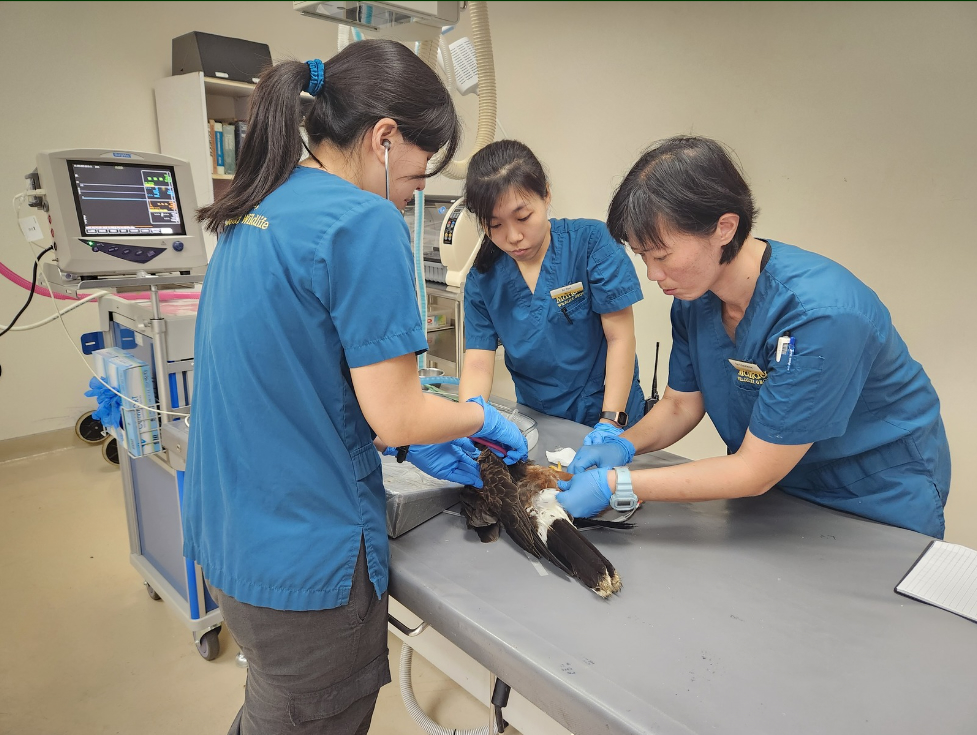
The new feature is being built in conjunction with Mandai Nature in Singapore to support the critical work of wildlife rescue and rehabilitation centres around the world.
Southeast Asia alone, one of the world’s most significant biodiversity hotspots, accounts for around 25% of the global illegal wildlife trade, with countries in the region frequently serving as source, transit, and destination markets.
Rescue and rehabilitation centres work directly with the consequences of the illegal wildlife trade, and the work aims to address the data challenges these centres commonly face: incomplete, non-standardized, and siloed records that prevent visibility into outcomes, hinder the tracking of rehabilitation metrics, and limit knowledge sharing.
By replacing incomplete or siloed record management with digital standardized data, this tool addresses the global challenges of the illegal wildlife trade, enabling centres to better track rehabilitation metrics and share critical knowledge for conservation.
Species360 is grateful to Mandai Nature for supporting this work.