ZIMS in Research – Why females live longer than males: evolutionary insights on longevity
- Species360
A new study, published in Science Advances, used ZIMS data to examine the adult lifespan gap between males and females in over 1,000 species.
Comparative study across 1,176 mammal and bird species reveals how sexual selection may have shaped sex differences in longevity.
Study highlights
- Zoo data: Researchers utilized ZIMS data to conduct a large-scale comparative study of sex differences in adult life expectancy in mammal and bird populations in zoos.
- Mammals vs birds: Among the 1,176 species studied, 72% of female mammals live longer than males, while in 68% of bird species, males live about 5% longer than females.
- Mating strategies play a role: In species with strong competition for mates – as is the case with most mammals – males die earlier. In monogamous species, such as many birds, males often live longer.
- Findings from zoos: Sex differences are more pronounced in wild populations than in zoos. This suggests that both genetic and environmental factors contribute to the discrepancy in life expectancy.
Around the world, women on average live longer than men. This striking pattern holds true across nearly all countries and historical time periods. Although the gap between the sexes has narrowed in some countries due to medical advances and improved living conditions, new research now provides clues as to why this difference is unlikely to disappear anytime soon: the causes are deeply rooted in evolutionary history and can be observed in many animal species.
An international team led by scientists at the Max Planck Institute for Evolutionary Anthropology in Leipzig and the Species360 Conservation Science Alliance, together with 15 co-authors worldwide, conducted the most comprehensive analysis of sex differences in adult lifespan across mammals and birds to date. Their findings provide novel insight into one of biology’s long-standing puzzles: why males and females age differently.
Longevity: A question of chromosomes?
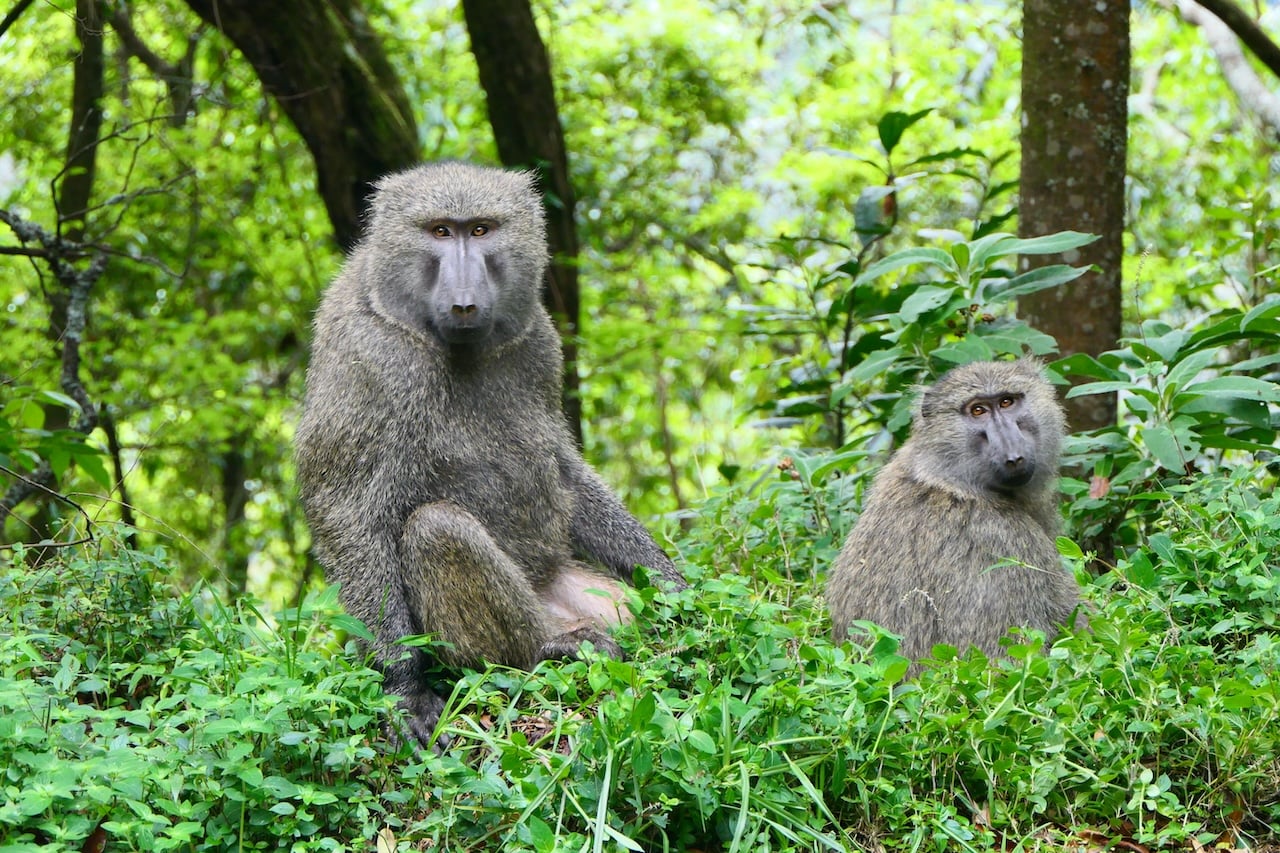
Across mammals, females usually live longer—for instance, in baboons and gorillas, females often outlive males. Yet this pattern is not universal: in many birds, insects, and reptiles, males are the longer-lived sex.
One genetic explanation, the heterogametic sex hypothesis, points to differences in sex chromosomes. In mammals, females have two X chromosomes, while males have only one X and one Y (making them the heterogametic sex). Some research suggests that having two X chromosomes may protect females from harmful mutations, offering a survival advantage. In birds, however, the system is reversed: females are the heterogametic sex.
In what is the largest study of its kind to be undertaken on this topic, researchers tapped into the largest repository of knowledge on animals in human care – the Species360 Zoological Information Management System (ZIMS). They analyzed ZIMS records on 528 mammal and 648 bird species, spanning the majority of taxonomic orders (20 of 29 mammalian orders and 31 of 42 avian orders) and covering taxa generally underrepresented in survival studies.
Dr. Morgane Tidière, co-author and Science Team Leader, Species360, said: “Our study sheds new light on why males and females differ in longevity across mammals and birds. We found that males often face shorter lifespans as a cost of competing for mates, although paternal care can sometimes offset this disadvantage. Importantly, these differences are less pronounced in zoos than in the wild, suggesting the influence of protected environments. This advance on a long-standing evolutionary question was only possible thanks to the dedication of Species360 members, whose decades of careful data collection for over 1,000 species make ZIMS an unparalleled resource for research and conservation.”

This advance on a long-standing evolutionary question was only possible thanks to the dedication of Species360 members, whose decades of careful data collection for over 1,000 species make ZIMS an unparalleled resource for research and conservation.
Dr. Morgane Tidière, co-author and Science Team Leader, Species360
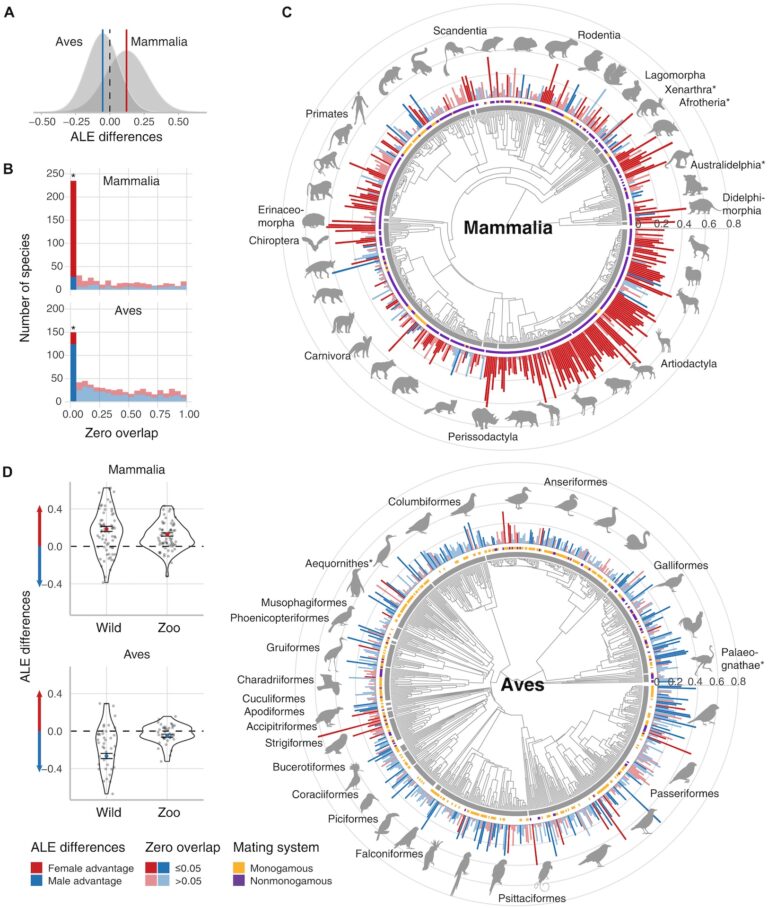
Using records from over 1,176 bird and mammal species in zoos worldwide, the researchers found a striking contrast in adult lifespan, supporting the heterogametic sex hypothesis: in most mammals (72%), females lived longer, by on average 12%, while in most bird species (68%), males lived longer, overall by an average of 5%. Still, there was remarkable variation with many exceptions.
“Some species showed the opposite of the expected pattern,” says lead author Dr. Johanna Stärk. “For example, in many birds of prey, females are both larger and longer-lived than males. So sex chromosomes can only be part of the story.”
Sexual selection and parental care shape lifespan differences
In addition to genetics, reproductive strategies also play a role. Through sexual selection, males in particular develop conspicuous characteristics such as colorful plumage, weapons, or large body size, which increase reproductive success but are costly to produce and maintain and therefore potentially shortening lifespan. The new study supports this assumption: In polygamous mammals with strong competition, males generally die earlier than females. Many birds, on the other hand, are monogamous, which means that competitive pressure is lower and males often live longer. Overall, the differences were smallest in monogamous species, while polygamy and pronounced size differences were associated with a more pronounced advantage for females.
Parental care also plays a role. The researchers found evidence that the sex that invests more in raising offspring—in mammals, this is often the females—tends to live longer. In long-lived species such as primates, this is likely to be a selective advantage: females survive until their offspring are independent or sexually mature.
Zoo life reduces but does not erase lifespan gaps
A long-standing idea is that environmental pressures—such as predation, pathogens, or harsh climates—drive the observed gaps between males and females. To test this, the researchers turned to zoo populations, where such pressures are largely absent. They found that lifespan gaps persisted even under these protected conditions. Comparing zoo and wild populations showed that the gaps were often smaller in zoos but rarely disappeared – mirroring the human case, where advances in medicine and living conditions have narrowed but not eliminated the lifespan gap.
Outlook
The findings suggest that sex differences in adult lifespan are deeply rooted in evolutionary processes—shaped by sexual selection and parental investment and that genetic differences in the sex determination system may also play a role. Environmental factors influence the extent of the differences, but cannot eliminate them. The differences between the sexes are therefore not only a product of the environment, but part of our evolutionary history – and will most likely continue to exist in the future.
ZIMS Data
Researchers obtained individual birth and death records for birds and mammals from the Species360 Zoological Information Management System (ZIMS) via a Species360 Research Request. This study demonstrates the impact ZIMS ex situ wildlife data can have on enhancing species knowledge and furthering our understanding of human biology.
Data sharing is central to Species360’s mission, and for over 50 years, Species360 members have contributed data to ZIMS, making it the world’s largest database of animals in human care. The Species360 Conservation Science Alliance (CSA) serves as a platform for data science collaborations, aiming to maximize the positive impact of ZIMS data to improve animal care and welfare, support conservation efforts, and advance scientific research, all while ensuring the privacy of Species360 member data.
For more information on the Species360 Conservation Science Alliance (CSA) or obtaining ZIMS data for research, please visit the CSA website.