
Introducing the speakers for the Species360 Conservation Science Alliance Research Symposium
- By Gavrielle Kirk-Cohen
Get ready for an insightful exploration into the latest conservation research at the upcoming 2nd Annual Species360 Conservation Science Alliance Research Symposium!
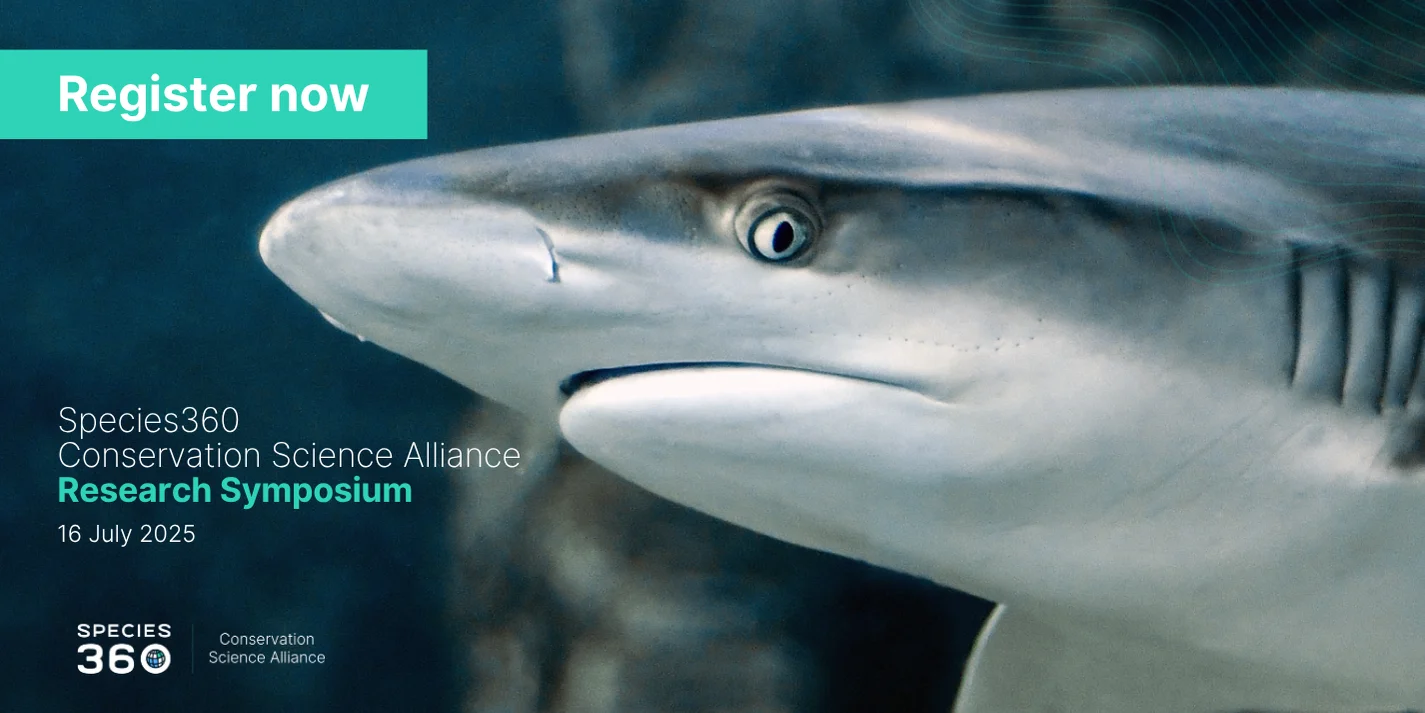
This year’s symposium, to be held online on 16 July, promises a fascinating line-up of speakers who are leveraging shared global wildlife data from the Species360 Zoological Information Management System (ZIMS), to address critical challenges in wildlife care and conservation. From understanding disease in endangered species to optimizing reintroduction programs, these presentations highlight the immense value of collaborative data in securing a future for threatened biodiversity.
The two hour event is free to attend. Please register through the link below.
Event details
When: 16 July 2025
Time: 9-11 am CDT / 4pm-6pm CEST
Register here: bit.ly/CSAResearchWebinar
Here’s a look at the list of speakers and their presentation topics for the upcoming Species360 Conservation Science Alliance Research Symposium.
Symosium speakers
Alice Doyle | PhD Candidate, Hartpury University
Topic: Mortality of zoo-housed vultures globally: using historical records to understand health outcomes.
- Research Summary: Vultures are highly endangered in the wild, yet empirical evidence on their health and welfare in zoos is scarce. Alice Doyle’s research delves into global vulture mortality records from ZIMS to identify patterns within and between species and continents. This initial study of her PhD project will establish the quality and quantity of available records, the demographics of the ZIMS vulture population, and document recognized causes of death. The ultimate goal is to understand how housing and husbandry impact mortality, morbidity, and breeding success in EEP vultures, directly contributing to improved animal care and breeding outcomes for these critically important birds.
Andrew Mooney, PhD | Senior Conservation and Science Officer, Dublin Zoo
Topic: Maximizing the potential for living cell banks to contribute to global conservation priorities.
- Research Summary: Cryobanking holds immense potential as a conservation tool, but its effectiveness is hampered by a lack of standardized information and inconsistent prioritization of species. Dr. Mooney’s work analyzes the representation of amphibians, birds, mammals, and reptiles in the San Diego Zoo Wildlife Alliance Frozen Zoo® and proposes a framework for prioritizing future sampling. By integrating global conservation assessment schemes (like the IUCN Red List) and opportunities for sample acquisition from the global zoo and aquarium community, the research identifies high-priority species for cryobanking, such as the whooping crane, crested ibis, and Siberian crane. The key benefit of this research is its call for a global cryobanking database and new cryobanks in biodiversity-rich regions, maximizing the impact of genetic preservation efforts for threatened species worldwide.
Caroline E. Moore, DVM, PhD | Scientist, Disease Investigations, Beckman Center for Conservation Research, San Diego Zoo Wildlife Alliance
Topic: Investigating the SOS Cheetah Story: connecting Species360 and epigenetics.
- Research Summary: An increase in hepatic sinusoidal obstructive syndrome (SOS) in African cheetahs at the San Diego Zoo Wildlife Alliance Safari Park prompted this vital research. Dr. Moore’s team is using biobanked cheetah liver and blood tissues to investigate epigenetic modifications, specifically DNA methylation, as molecular clues to the disease’s origin. Crucially, they are linking these epigenetic changes to the life history of individual cheetahs using ZIMS data, including health records, pharmacology, toxicology, nutrition exposures, and pathology data. The goal is to create a template for linking wildlife health with conservation science for population management, with outcomes including the identification of epigenetic biomarkers for early SOS detection, insights into potential causative insults (like toxins), and feedback on the impact of management changes through health records and PCR monitoring. This research directly benefits cheetah health and informs better management decisions for this vulnerable species.
Samuel Pavard, Ph.D. | Muséum national d’Histoire naturelle, CNRS, Université Paris Cité, France
Topic: Age-specific cancer mortality is asynchronous from other ageing-related mortality in 24 mammal species.
- Research Summary: While cancer is often considered an aging disease, most research focuses on a limited number of species. Dr. Pavard’s study utilizes a vast dataset of 6,021 necropsy reports from 24 ex situ mammal species to compare cancer mortality with other senescence-related causes. His findings reveal that longer-lived species exhibit lower relative age-specific cancer mortality, and that while overall patterns are correlated, cancer mortality increases faster in early adult life and then decelerates. This project showcases the immense power of zoo and aquarium data in unraveling fundamental biological mechanisms. The outcomes will significantly aid in understanding the determinants of aging across species and, more broadly, improve health management for older individuals in human care, with potential implications for human medicine.
Timothy Smith, MSc | Aquarist, South African Association for Marine Biological Research
Topic: Using biometric data from captive specimens to inform knowledge gaps in batoid research.
- Research Summary: Many elasmobranch species (sharks, rays, skates) are poorly understood and threatened, with limited access to wild specimens for study. Timothy Smith’s research addresses this gap by utilizing biometric data from ZIMS, collected from uShaka Sea World and other global institutions. His study developed growth rates, length-weight relationships, von Bertalanffy growth functions, and estimated longevity and age-at-maturity for five batoid species, comparing results where wild data existed. Beyond growth, ZIMS data can also provide insights into reproductive seasonality, gestation, litter size, and early life history. This research highlights the increasing importance of zoos and aquariums as sources of biological information for population management and conservation. Practical applications include estimating age for wild animals, assisting in body condition scoring, and informing drug dosage, feed ration, and life support system calculations for animals in human care, directly enhancing animal care and welfare.
Hana Thompson, MSc | Research Biologist – Genomics, Department of Research and Conservation, African Lion Safari, Cambridge, Ontario, Canada
Topic: Using fitness surfaces to better link conservation breeding programmes with wild population recovery.
- Research Summary: Anthropogenic activities are creating shifting environments, making it challenging for conservationists to predict wild population adaptation. Hana Thompson proposes fitness surfaces as a valuable tool to bridge the gap between ex situ breeding programs and wild populations. By using extensive life-history trait data from multiple species within ZIMS, she demonstrates how this tool can help zoos make informed decisions about which animals to release and where to release them. When combined with wild population data, fitness surfaces can predict reproductive success in both ex situ and in situ environments, thereby optimizing reintroduction efforts and the selection of release candidates. The inclusion of fitness surface estimates into conservation breeding programs is expected to increase the effectiveness of reintroduction efforts and improve our understanding of evolution at the interface of human-managed and wild populations, ultimately strengthening conservation outcomes.
These presentations underscore the vital role of ZIMS as a global database of animal data, enabling collaborative, data-driven research that directly benefits animal welfare, species management, and global conservation efforts.
Don’t miss this opportunity to learn about the innovative ways researchers are turning data into actionable insights for the future of wildlife!
Register here: bit.ly/CSAResearchWebinar
Want to learn more about accessing ZIMS data for research?
If you would like to learn more about using ZIMS data for your research, click here to learn more about our Species360 Insights subscription which provides researchers with access to our global aggregated and anonymized data, covering veterinary and global demographic data.
If you would like to learn more about our Research Request process and joining the Conservation Science Alliance, please visit the Conservation Science Alliance website.


