Designing Scalable Animal Record Keeping Systems for Modern Zoological Institutions
- By Species360
The Hidden Cost of Systems That Cannot Grow
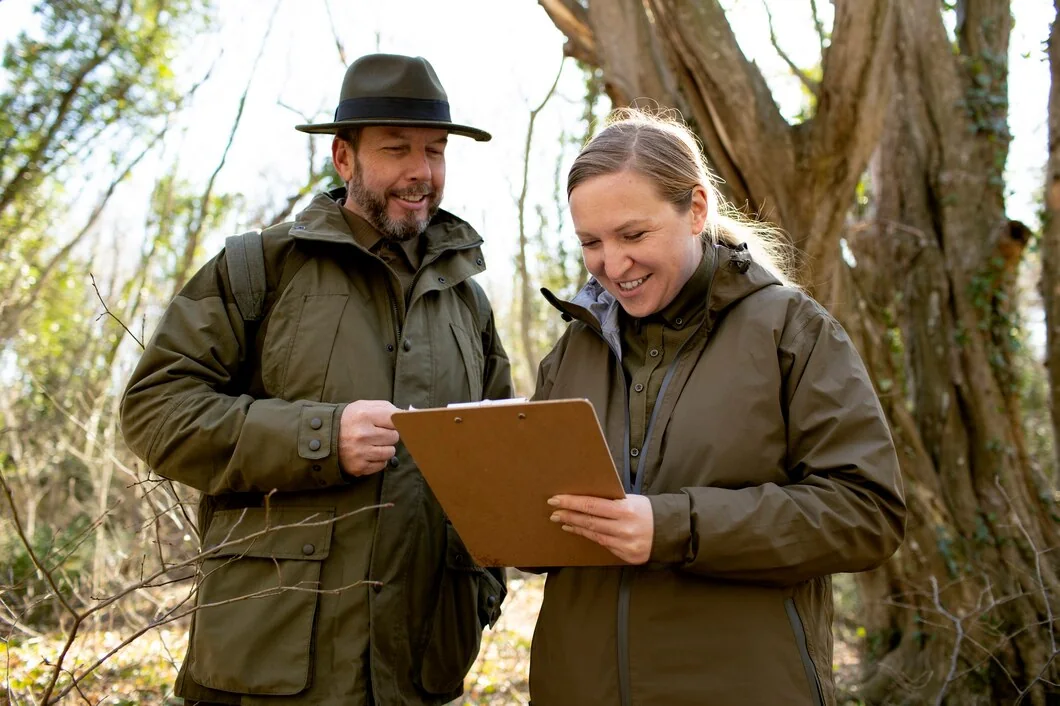
For zoological institutions, wildlife sanctuaries, and managed care facilities, the challenge of managing animal data is not simply a technical problem. It is an operational one with direct consequences for animal welfare, regulatory compliance, and institutional credibility. Many organisations that invested in record keeping infrastructure a decade ago are now discovering that their systems were designed for a fixed scale and a narrower scope than the one they now operate within. Collections have grown. Species diversity has increased. Regulatory demands have multiplied. And the legacy systems that once served adequately are now producing inefficiencies that ripple across every function of the institution.
The question of scalability in animal record keeping is not often framed explicitly at the point of system design, yet it is the variable that most determines whether an investment in record infrastructure delivers sustained value or requires premature replacement. A system that works for fifty animals across three species may become functionally unmanageable when that collection grows to five hundred animals across forty species. A data structure that supports basic demographic recording may become entirely inadequate when the organisation is also required to capture behavioural assessments, veterinary histories, genetic provenance, transfer documentation, breeding programme participation, and individual enrichment records.
Designing for scalability from the outset requires a discipline that many institutions do not apply at the planning stage. It requires decision-makers to think not about the current state of their collection, but about the plausible future state over a five to ten year horizon. It requires an assessment of not just which data fields are needed today, but which categories of information the institution may be expected or required to capture as regulatory frameworks evolve and as participation in international conservation programmes deepens.
The Structural Dimensions of Scalability
Volume Scalability: Records, Species, and Individuals
The most obvious dimension of scalability is volume. A record keeping system must be capable of accommodating growth in the number of individual animals under management, the number of species represented in the collection, and the volume of transactions recorded against each individual over time. For a long-lived species such as an elephant or great ape, the cumulative volume of veterinary records, behavioural observations, reproductive events, and transfer documentation may span decades. Systems that impose arbitrary limits on record volume per individual, or that degrade in performance as record counts increase, are structurally incompatible with long-term collection management.
Volume scalability also extends to concurrent users. As institutions grow and as data entry responsibilities are distributed across curatorial, veterinary, and husbandry teams, the record keeping system must support simultaneous access without data conflicts or performance degradation. A system designed for single-user operation or for a small team working in sequence is not a scalable system, regardless of how well it manages individual records.
Functional Scalability: Expanding Data Categories
Beyond volume, a scalable system must be capable of accommodating new categories of information as institutional needs and regulatory requirements evolve. The scope of data that zoological institutions are now expected to maintain has expanded substantially over the past two decades. Where records were once primarily focused on demographic information and medical history, institutions are now expected to document genetic sampling, contraception management, studbook participation, international transfer permits, CITES documentation, behavioural welfare assessments, and environmental enrichment programmes.
A record keeping architecture that cannot absorb new data categories without requiring wholesale system redesign is not scalable in any meaningful sense. Scalable systems are those built on extensible data models, where new fields, new record types, and new relational structures can be added incrementally without disrupting existing data or requiring users to migrate to an entirely new platform.
Organisational Scalability: Multi-Site and Network Operations
For institutions that operate across multiple sites, or that participate in regional and global collection management networks, scalability also has an organisational dimension. A system that is effective within a single facility but cannot consolidate records across sites, or that cannot share data with partner institutions and studbook coordinators, is a system that places the organisation at a competitive and operational disadvantage in the increasingly networked world of zoological management.
Organisational scalability requires that the underlying architecture support role-based access controls that allow different user types across different sites to interact with the same data set in appropriate ways. It requires that the system support data sharing protocols that are compatible with the standards used by regional and international collection management bodies. And it requires that the system maintain data integrity even when records are being created or modified by distributed teams operating in different time zones and under different institutional policies.
Common Design Failures and Their Consequences
The most frequently observed design failure in animal record keeping systems is the prioritisation of immediate usability over architectural robustness. Systems that are quick to implement and easy to use at low volumes often achieve this by simplifying the underlying data model in ways that become problematic as scale increases. Flat data structures that work well for a small collection become unwieldy when relationships between individuals, between events, and between records need to be maintained and queried across a large population.
A second common failure is the absence of meaningful data validation at the point of entry. Systems that allow free-text input in fields that should be controlled vocabularies, or that do not enforce referential integrity between related records, accumulate data quality problems over time that become progressively harder to correct. When a record for an individual animal references a location code that does not exist in the system’s location register, or when a medical event is recorded without a valid attending veterinarian reference, the resulting data degradation undermines the reliability of the entire record set.
The financial consequences of poor scalability planning are substantial. Institutions that outgrow their record keeping systems face a choice between continuing to operate with inadequate infrastructure, accepting the data quality and operational risks that entails, or investing in system migration, a process that is invariably costly, disruptive, and time-consuming. Migration projects in complex zoological collections typically require months of data cleansing, mapping, and validation before a new system can be brought into production. The costs of that transition frequently exceed, by a significant margin, what would have been required to implement a properly scalable system at the outset.
Principles for Scalable System Design
Several design principles consistently distinguish systems that scale well from those that do not. The first is the separation of the data model from the user interface. Systems where the underlying data structure is tightly coupled to how information is displayed and entered are inherently resistant to extension. When new data requirements emerge, the entire presentation layer must be redesigned alongside the data layer, multiplying the cost and complexity of change.
The second principle is the use of controlled vocabularies and standardised data formats wherever possible. Institutions that allow uncontrolled terminology in species names, location designations, condition classifications, and procedure codes accumulate terminology variation that makes reporting, data sharing, and longitudinal analysis progressively more difficult. Alignment with established zoological data standards, such as those maintained by international collection management bodies, provides a foundation for both internal consistency and external interoperability.
The third principle is the design of user access controls that reflect the actual operational structure of the organisation. A system where all users have equivalent access to all records is not scalable in an organisational sense, because it cannot accommodate the division of responsibilities that characterises larger, more complex institutions. Scalable systems implement granular permission models that allow data entry, review, approval, and reporting to be managed by different user roles without compromising data integrity or creating bottlenecks in workflows.
For institutions evaluating whether their current infrastructure is positioned to support future growth, the zoological records database maintained by Species360 provides a reference architecture for what purpose-built, scalable animal record keeping systems can and should deliver at institutional and network scale.
Planning for Scale: A Decision-Making Framework
Institutions approaching a record keeping system design or selection decision should evaluate candidate systems against a structured set of scalability criteria rather than against current operational requirements alone. The evaluation should address projected collection growth over a five and ten year horizon, anticipated changes in regulatory reporting obligations, current and planned participation in regional and international management programmes, the organisation’s multi-site architecture, and the technical capacity available to support system administration and development.
The evaluation process should also include a realistic assessment of the total cost of ownership over the intended system lifetime, not just the implementation cost. Systems with low initial costs but limited scalability frequently generate significant remediation and migration costs within five to seven years. Systems built on scalable architectures with strong vendor support and active development communities tend to demonstrate lower total cost of ownership over longer periods, even when the initial investment is higher.
Leadership involvement in the scalability evaluation is essential. Record keeping system decisions are too often delegated entirely to technology teams without adequate input from the curatorial, veterinary, and conservation professionals who understand the institutional requirements that the system must support. The most effective system selection processes combine technical evaluation with strategic input from across the institution, ensuring that the selected system is not merely capable of handling current data, but is genuinely positioned to support the institution’s strategic ambitions over the next decade.
Conclusion
Designing scalable animal record keeping systems is not a technology problem. It is a strategic decision that determines whether an institution’s data infrastructure will support or constrain its future growth. The decisions made at the design stage determine not just how records are managed today, but whether the organisation retains the data quality, operational flexibility, and regulatory compliance capability it will need as its collection, its obligations, and its network of partnerships continue to expand. Institutions that are ready to evaluate their current infrastructure or to explore what a purpose-built system can deliver are welcome to get in touch with our team.