Hope in Flight: How Collaboration is Helping the Poweshiek Skipperling
- By Taylor Johnson
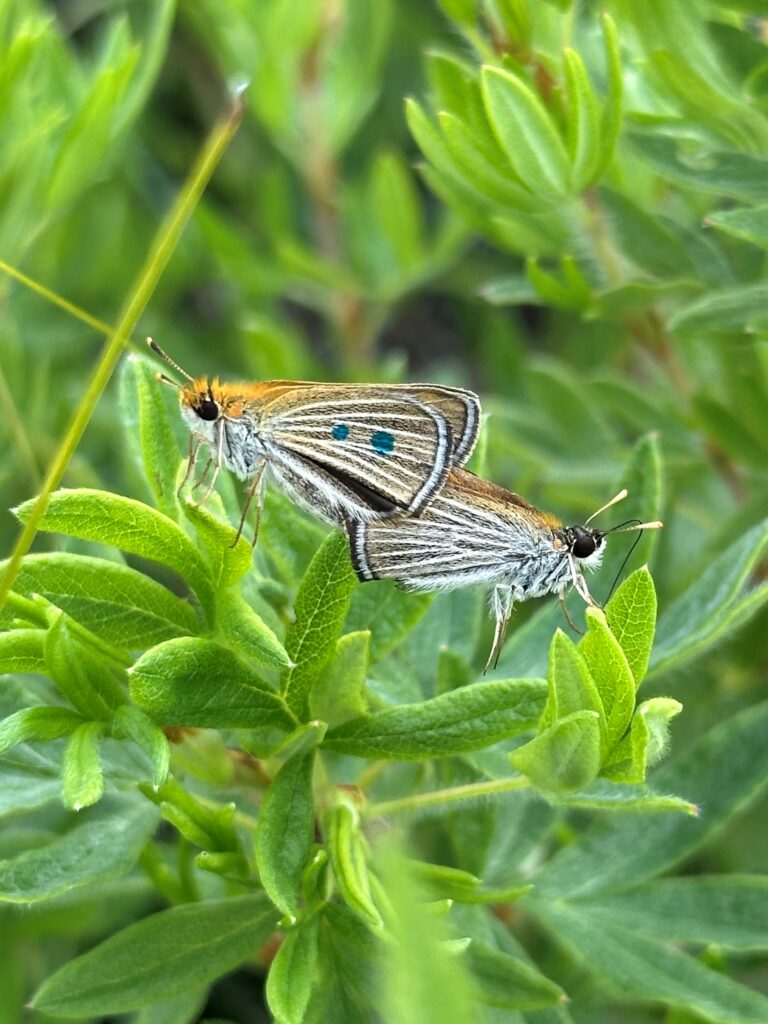
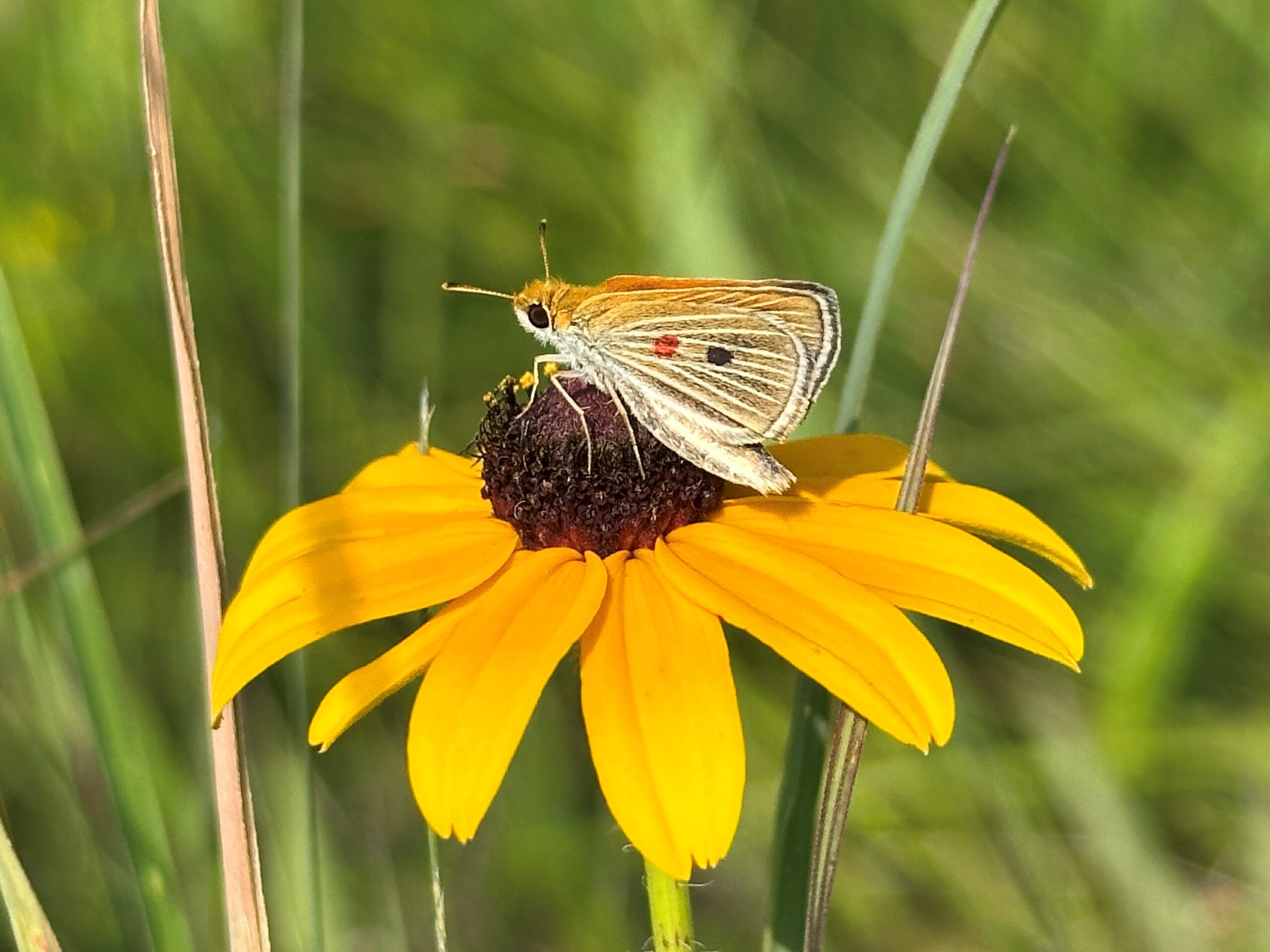
The Poweshiek skipperling (Oarisma poweshiek), a small orange-and-brown butterfly once common across North American prairies, has become one of the world’s most endangered insects. With only a handful of wild populations left, this species represents a known crisis with an urgent call to action. Across the Midwest and Great Lakes, a coalition of zoos, conservation organizations, and research institutions is working to reverse its decline, one fragile wing at a time.
The skipperling’s story reflects a broader crisis: insect populations worldwide are declining due to many factors, including habitat loss, pesticides, and climate change. It also shows what’s possible when institutions share expertise, coordinate efforts, and leverage tools to turn data into conservation action. From population modeling software that predicts viability to data management systems that coordinate breeding programs, technology has become essential to modern species recovery efforts.
A Prairie Butterfly on the Edge
The Poweshiek skipperling once fluttered across tallgrass prairies from Manitoba to Iowa and east into southern Michigan. Today, after a 99 percent population decline, only eight or fewer wild populations remain, each now compressed into areas no bigger than a department-store parking lot. As an indicator species, its decline reveals deeper problems within prairie ecosystems: the loss of native grasslands, the spread of invasive species, and the fragmentation of habitat that countless other species depend on.
This butterfly is more than a conservation program. It’s a symbol of what we stand to lose when ecosystems degrade, and what we can save when science, passion, and collaboration come together.
Minnesota Zoo: Where the Plight Took Flight
Species360 member, the Minnesota Zoo, launched the pioneering conservation program for the Poweshiek skipperling, studying population declines and developing ex situ breeding techniques from the ground up. Working with short-lived species such as butterflies requires different approaches than traditional zoo-based conservation programs, which typically focus on longer-lived species. The Minnesota Zoo’s work shows that with the right methods and partnerships, even species with brief lifespans can benefit from coordinated breeding efforts under human care.

Modeling the Path Forward: Vortex and Population Viability
Before committing resources to establishing a conservation breeding program, conservation teams needed to understand the skipperling’s extinction risk and determine which management strategies would be most effective. This is where population viability analysis became critical.
The conservation partners used Vortex, a sophisticated population modeling tool from the Species Conservation Toolkit Initiative (SCTI), to simulate the skipperling’s future under different scenarios.
Vortex models how small populations respond to the multiple threats they face, such as environmental changes, shifts in survival and reproduction, loss of genetic diversity, and unexpected events. By simulating thousands of possible outcomes for the skipperling population, Vortex helped conservationists understand extinction risks and evaluate potential interventions before implementing them in the field.
The IUCN SSC Conservation Planning Specialist Group (CPSG) has played an important role in this process as well. CPSG facilitated the first Ex Situ Feasibility Assessment and Planning workshop for the Poweshiek skipperling at the Minnesota Zoo in 2015, helping partners define goals and evaluate potential management pathways. CPSG’s involvement continued with population modeling support, including leading the Vortex analysis that informed a study published earlier this year. CPSG’s long history with Vortex, spanning more than 40 years, has made the group a steady advocate for using the tool to guide science-based conservation decisions.
Organizations Helping the Program Spread Its Wings
The Minnesota Zoo isn’t alone in their efforts to save this little butterfly. Additional AZA-accredited zoos have joined the ex situ effort including the Assiniboine Park Conservancy which has taken the lead in recovery efforts in southern Manitoba. More recently, the John Ball Zoo, in partnership with Michigan State University’s Haddad Lab, has begun dedicating space and staff time to Poweshiek skippers care-expanding the number of butterflies that can be released each year. U.S. Fish and Wildlife Service guides recovery planning and field releases, and the Michigan Natural Features Inventory continues to monitor remaining wild populations and habitat conditions.
Forming the Poweshiek Skipperling International Partnership, this network spans institutions, states, and international borders – proof that when organizations share knowledge and resources, conservation impact multiplies.
Tracking Success: The Role of Data in Multi-Site Breeding Programs
Coordinating breeding programs across multiple institutions requires detailed record-keeping and data sharing. Each butterfly’s lineage, health status, and breeding success must be tracked to maintain genetic diversity and maximize the program’s conservation impact.
Species360’s Zoological Information Management System (ZIMS) helps institutions manage and share animal data in real time, enabling the coordination needed when multiple organizations are working toward a common conservation goal. While scientists and zookeepers do the hands-on work of caring for and breeding these butterflies, ZIMS provides the infrastructure to ensure that critical information flows seamlessly between everyone involved.
Together, tools like Vortex and ZIMS represent comprehensive approaches to conservation technology; Vortex helps make strategic decisions about how to manage populations, while ZIMS enables the day-to-day coordination that turns those strategies into reality.
The Quiet Work: Restoring Prairie Habitats

Ex situ conservation breeding efforts alone can’t save the Poweshiek skipperling. Released butterflies need healthy prairies to survive and reproduce, which means ongoing, labor-intensive habitat work such as removing invasive plant species, maintaining native grasslands, and expanding suitable habitat corridors. This restoration work never ends and requires year-round commitment from field biologists, land managers, and conservation staff.
Partners like Nature Conservancy Canada, Michigan Natural Association, U.S. Fish and Wildlife Service, and others help lead this essential field work, ensuring that when the butterflies are ready for release, a suitable habitat awaits them. Hundreds of butterflies have been raised with the potential for release into these restored wild habitats.
AZA Top Honors
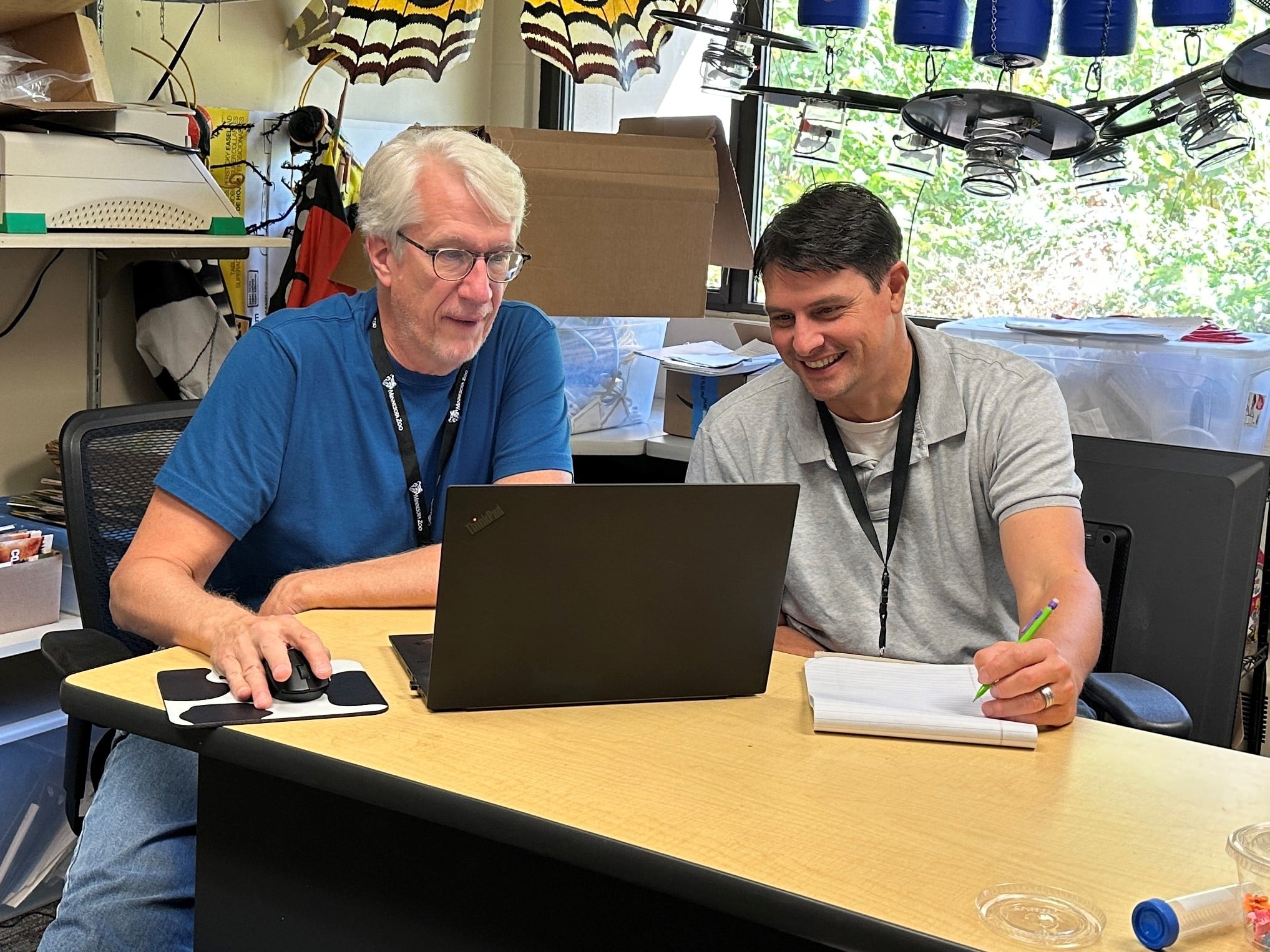
In 2025, The John Ball Zoo, Minnesota Zoo, and Assiniboine Park Conservancy received the North American Conservation Award (Top Honors) from the Association of Zoos and Aquariums (AZA) for this groundbreaking Poweshiek skipperling conservation work.
This award acknowledges more than one species’ survival. It validates a conservation model built on shared data, distributed expertise, and unwavering commitment across institutions. The Poweshiek skipperling program demonstrates that even the smallest species can inspire large-scale collaborative action, and that zoos have a vital role in preventing extinction.
Hope Takes Flight
The Poweshiek skipperling conservation program shows what’s possible when institutions work together with shared tools and shared purpose. The skipperling’s future is uncertain, but the progress being made is real. Every butterfly released represents countless hours of scientific work, habitat restoration, and cross-institutional collaboration. This conservation effort in action is powered by partnership, grounded in science, enhanced by accessible technology, and guided by the belief that biodiversity is worth fighting for, no matter how small the species.
Investing in Conservation Technology for Future Species
The Poweshiek skipperling’s story also demonstrates why investing in conservation software tools matters. Population modeling, genetic analysis, and data management platforms enable the kind of coordinated, science-based action that can pull species back from the brink.
The Species Conservation Toolkit Initiative develops and sustains these essential tools for conservation practitioners globally. SCTI leverages expertise in population biology, computer programming, and species conservation planning to build modeling tools that guide conservation actions for thousands of threatened species in the wild and facilitate intensive management of hundreds of species protected in conservation breeding programs. SCTI is a community-funded partnership to ensure that the new innovations and tools needed for species risk assessment, conservation planning, and managing populations are developed, are globally available, and are used effectively. Brookfield Zoo Chicago, the Smithsonian Conservation Biology Institute and the IUCN Species Conservation Planning Specialist Group (CPSG) played a pivotal role in founding and developing SCTI. Species360 is grateful to Brookfield Zoo for its long-time support as host of SCTI, and its continuing support of SCTI.
Keeping these tools accessible requires ongoing support. Development, maintenance, training, and technical assistance ensure that conservation teams everywhere—from major zoos to small field programs—have access to the same essential technology. When you support the Species Conservation Toolkit Initiative (SCTI), you’re not funding a single species recovery effort; you’re investing in the technological foundation that makes hundreds of conservation programs possible worldwide.
Every species saved through tools like Vortex represents the collective effort of practitioners who had access to the resources they needed, when they needed them. This global impact is made possible thanks to major supporters such as Brookfield Zoo, San Diego Wildlife Alliance, Mandai Nature, and many others.
Learn More and Get Involved
Support the tools that make conservation possible: The Species Conservation Toolkit Initiative (SCTI), part of Species360, develops and sustains essential software like Vortex for species risk assessment, conservation planning, and population management. These tools are accessible to practitioners worldwide, enabling science-based decision making for thousands of threatened species.
Explore conservation data management: Learn more about how ZIMS connects global data to local conservation action at ZIMS – Species360.